
32.5K
Downloads
173
Episodes
Take a seat at Painted Bride Quarterly’s editorial table as we discuss submissions, editorial issues, writing, deadlines, and cuckoo clocks.
Episodes
Mar 19, 2024
Mar 19, 2024
48 min
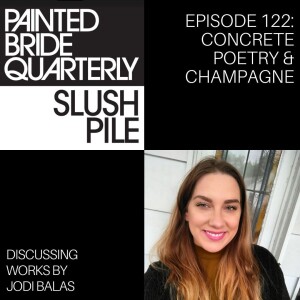
Dearest Slushies, we’re so happy to be back in the saddle! We took a mini-hiatus and return with this episode devoted to the poems of Jodi Balas. You’ll hear us mull over her artful use of concrete poetry and dive deep into her thinking about poetry, the body, and NFTs. How does a poem’s form entwine with its image system in order to serve its sense? How is taste also (always) about power? All of these questions are wrapped in a glittering cascade of editorial acumen and quirky dishing: Listen as Dagne explains the difference between NFTs and Cryptocurrency, reminding us of Rattle’s prescient issue dedicated to NFT poets. Or let us know what you think: should “mini cocktails” ever be a thing for happy hours? Is “drinkable” ever a compliment? Can we make a meme of Jason’s seductive eyebrow skills? In addition to the following links you might dig– NFTs explained in 5 Minutes & Brit Bennett’s “Ain't That Good News”-- we invite you to contemplate the ritual of champagne sabering (if you try this in your backyard, shout “Poetry!”) With best wishes for a happy new year from the Slush Pile Crew.
At the table: Kathleen Volk Miller, Marion Wrenn, Jason Schneiderman, Dagne Forrest, Samanatha Neugebauer

Jodi Balas is a neurodivergent poet from Northeast Pennsylvania. A lover of words (salacious, being a favorite – it just rolls off the tongue), her poetry has been accepted in Hole in the Head Review, Wild Roof Journal, Humana Obscura, Pinch Journal, and elsewhere. Jodi’s poem, “His mouth, mine” was selected as a finalist for the 2023 River Heron Review poetry prize and her poem, “Bone Density” won the 2023 Comstock Review Muriel Craft Bailey Award judged by Danusha Lameris. Jodi is in the process of developing her first chapbook to market to the poetry world. You could follow her musings on Instagram @jodibalas_
WALKING TO SURRENDER
The ghost at my side,
the knife in my coat pocket
hanging on the coat rack. I
yield to morning in apprehension
almost every morning. I’m
hardening, becoming the
weight of two dead trees. A
spool of thread wound so tight,
it’s hard to find the starting
point - the dull tip of a needle is
useless. I try and unknot the
shoelace from yesterday, the
muscle of memory below the ribs
and figure out which direction I’m
headed or which route is correct for
my mental state I’ve been trying
to correct but cannot correct
until I surrender entirely to the
blinding wave of fear.
MY BODY AS AN NFT
Allow me to unshackle
your wrists, bring you
up off your knees & up to
speed. Call me a good
investment, the original
copy. Non-refundable,
metallic over bone, wire
over skin – untethered,
the virtual sin. You cannot
use me in some side hustle,
sleight of hand deal. I am
my own creator. Watch
how I catapult through
your veins and rush you
faster than a thief with a
shank. Electric/cryptic
#mytongueisdigitalweight
Begging for a bit of action
you’re not sure how to
obtain. Tell me, is there
mutual interest? I can
tell you that I’m priceless.
Watch closely before I
become a liability, before
your pockets explode,
before the scales begin
to re-balance themselves.
Oct 24, 2023
Oct 24, 2023
55 min
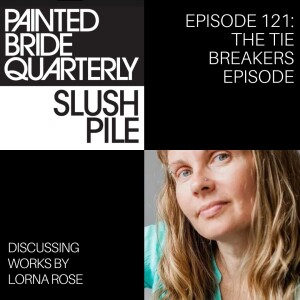
In this episode we discussed three very different poems by Oregon poet Lorna Rose, all three resulting in juicy conversation and resulting in three tie-breakers (none of them involving the same voting configurations amongst our team!). This was a big first for us. The episode was kicked off by a larger discussion (prompted by the first poem) around aspects of cultural appropriation and touched on facets of trauma and language. This wide-ranging discussion and the split in our voting pointed to the power and ambiguity of various elements in these poems. In the end, a tie-breaking editor helped deliver two of these poems into PBQ’s pages! Have a listen!
Note: This episode was recorded in December 2021, so there will be a bit of time travel involved.
This episode is brought to you by our sponsor Wilbur Records, who kindly introduced us to the artist is A.M.Mills whose song “Spaghetti with Loretta” now opens our show.
At the table: Kathleen Volk Miller, Marion Wrenn, Jason Schneiderman, Alex Tunney
Absentee voter for the tie-breakers: Samanatha Neugebauer
Links to things we discuss you might like to check out:
"Declaration" by Tracy K. Smith, an erasure poem of the Declaration of Independence
https://www.poetryfoundation.org/poems/147468/declaration-5b5a286052461
"Native Son" by Richard Wright
https://www.newyorker.com/magazine/1992/07/20/the-hammer-and-the-nail
"Appropriate: A Provocation" by Paisley Rekdal
https://wwnorton.com/books/9781324003588
"How-To" by Anders Carlson Wee and retraction by The Nation
https://www.thenation.com/article/archive/how-to/
"Inside Kate Winlset's Mare of Easttown" Pennsylvania Accent, Vanity Fair
https://www.vanityfair.com/hollywood/2021/04/kate-winslet-mare-of-easttown-accent
Lorna is a Pacific Northwest writer and speaker. Her narrative nonfiction and poetry have been recognized by Pacific Northwest Writers Association and the Oregon Poetry Association, and have appeared or are forthcoming in Scary Mommy, Jellyfish Review, Painted Bride Quarterly, Writers Resist, and elsewhere. She's also a speaker and workshop leader. When not wrangling her two small children, she fantasizes about being interviewed on NPR’s Fresh Air.

Leaving Libya
I flood my lungs
with the wet stench of fish and bodies and fuel.
Dinghy motor whines against the night.
Salt air grinds my skin ‘til it’s threadbare and
there’s no sitting since leaving Sabratha.
Body clenches tight to its bones
and shrill muscles shriek and weep and lock up.
Damp t-shirt clings to goosebumped flesh under a
tattered orange life jacket. But what life?
Next to me a shaking woman holds her boney baby
and cries. She has shit herself.
Behind me a man mumbles and mumbles for water.
His eyes roll hollow,
mouth slacks open.
From his breath
I smell the thick stink of rot,
the gray smell of
forgotten humanity.
Lights of the Italian coastline appear and
my heart races,
vision blurs.
From somewhere behind there’s a jolt.
Yelling.
Floor tilts.
And the lights of Lampedusa go black.
Surviving the Rush
No music plays in
the general store in Circle, Alaska,
which is full of mukluks and
Wonder Bread.
Villagers fish the Yukon,
memorize river rise,
bet on
breakup.
Long ago miners arrived from Outside
to sift, chip
rip fortunes
from earth.
Stilts were drilled into permafrost and
structures were imposed and
all bustle and
rage.
Then claims fell dry and
no patience and Circle started to
wither.
The locals
picked up pieces of buildings, tried to
heal the
pock-marked ground.
Today a tourist’s crisp dollar might
mean something,
except the locals would have to tolerate
the perfumey tourist.
Villagers fish the Yukon,
memorize river rise,
bet on breakup. The soil smells of
fool’s gold and blood.
Oct 6, 2023
Oct 6, 2023
37 min
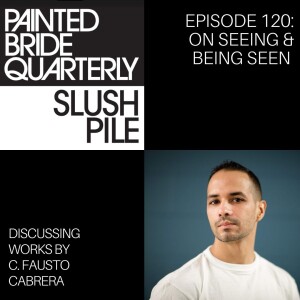
Slushies, in this episode we consider two poems by C. Fausto Cabrera, both of which speak, in very different ways, to the imagination in building our sense of self. The notion of being seen, a topic of universal relevance to any writer or artist, is explored in the first poem, which ends with the line “stuck in between the covers wondering when you’ll be back”, simultaneously exploring themes of incarceration or imprisonment. This discussion leads us to consider the many layers of being seen and Jason takes a moment to appreciate the “sexy time” of having a book tucked in your pocket. The second poem takes us on a related yet palpably different journey and reveals one of the paths our editorial discussions can take us to. Take a listen, you won’t be disappointed!
This episode is brought to you by our sponsor Wilbur Records, who kindly introduced us to the artist is A.M.Mills whose song “Spaghetti with Loretta” now opens our show.
At the table: Kathleen Volk Miller, Jason Schneiderman, Samantha Neugebauer, and Dagne Forrest.
C. Fausto Cabrera is a multi-genre artist and writer currently incarcerated since 2003. His work has appeared in: The Colorado Review, The Antioch Review, Puerto del Sol, The American Literary Review, The Water~Stone Review, The Woodward Review, among others. "The Parameters of Our Cage" is his prose collaboration with photographer Alec Soth.

To Be Seen at All ,
"What makes us so deserving of space
in other people' s minds?"
-Daniel Ruiz
My boss in the kitchen asks me how it felt to be famous
after looking up my Washington Post Magazine
essay & cover art online. The question left me stuck
I didn't feel famous. I hadn't received much mail in years.
What does celebrity mean separate from saturation, fame to
the incarcerated— but infamy?
I question the value of telling people about accomplishments,
about publishing at all— in a place where your spades
game gets more respect, & swagger's stuck in the last time you punched a
muthafucker in the face, what' s the point? I just felt petty
for wanting to be seen at all. Guards are more concerned
with how many towels I have than who I become.
I'm being heard— & that should be the focus, right?
Is the nobility of a thing in or on purpose? Or the other
way around? Cause who ever does anything for nobility—
I'm starving to be objectified: stripped down by the new young blond
guard like a Skinamax late nite B-movie, why else do hundreds
of burpees if not to play into the bad boy fantasies of anyone watching?
I went away before social media, but had my Lil’ cousin Artesia build
me a platform to stand upon, thinkin' it'd present me
somehow, someway, maybe keep me present— be on someone's mind or
wall, admired even for a moment. The Past says they miss me, but
since they never reach past the screen it's not the real me,
only their memory. It’s not about me at all—and neither should the work be.
There is a point to this poem, in its lack of trust. & none of it is an answer.
How can I count on anything through a 2-way mirror? I am just
a writer, the world through my eyes glows different due to the depths of my
damage. When you close this book & move on
I'll still be stuck in-between the covers,
wondering when you'll be back.
In the Sun that Seeps from the Dungeons/ Window/ Everything is Bright
Because God is in an algorithm I hear through the toggle of my shuffle button/ from a playlist I
composed/ I tell myself/ that if I listen, while the TV projects a pretty face to see when I look up
from what I'm reading of poetry, mechanical pencil, click, click, underlining & taking notes in
the margins— sipping a mug of French vanilla creamer laden coffee w/thoughts swirling in my
cinnamon head/ the sheer alchemy of it all should/ naturally combust! What butterfly wings must
taste like/embers floating/escape the chaos, wondering west to set fires/troublesome/I
want blood in the cut, I want noise/they made me something vicious. Will I burn out or fade
away? The man in black speaks for me & reminds me I'm not alone. A rainbow in
the dark, I'll take death before dishonor, bet I bomb on them first/ it's just the life of an
outlaw.
I am an amalgamation of influences, intricate in their darkness, complex in their
origins, some speak integrable nostalgic, others spark dumb & rash/& I gave
away my youth to sit & listen to all at once/hopeful/ saying something of a future I'
II forget/ I longed for/ once /it arrives. I read my poetry book, circle a
word or phrase to slow down, hoping to see something I can lift/ above a drawn
line or jot in the margins that can change the way I see or say.
Words & wonder/ pour into my ears, my eyes catch/ images I pull into my
heart while I swallow the sweetness of an appreciation. In these
moments I am alive. Then God says, through The City of Prague' s
Philharmonic Orchestra that the path isn't interchangeable.
There's no other person I'd rather be.
Sep 19, 2023
Sep 19, 2023
58 min
When to break a line, Slushies. And why? What’s the shape your poem takes, and how does the poem’s form serve its complexities, subtleties, and heart? Three poems by Karl Meade are up for consideration in this episode of The Slush Pile, and they call the editors into conversation about trauma in literature, narrative (in)coherence as craft, and the pleasurable risks of stair-stepped stanzas. Poet L.J. Sysko joins the conversation on this episode of The Slush Pile as we discuss “Beach Fall,” “Christmas Break,” and “Doom Eager.” (If a tree falls in the woods, Slushies. Ammiright?)
At the table: Kathleen Volk Miller, Marion Wrenn, L. J. Sysko, Jason Schneiderman, Samantha Neugebauer, Alex J. Tunney
Karl Meade’s work been published in many literary magazines, a few of which he didn’t even donate heavily to, or previously serve as editor—including Literary Review of Canada, Tusculum Review, Arc Poetry Magazine, Grain Magazine, Chronogram, Umbrella Factory Magazine, Contemporary Verse 2, Event Magazine, The Fiddlehead, Open Letter, Under the Sun, and Dandelion. His work has also been mistakenly longlisted for four CBC Literary Prizes, shortlisted for The Malahat Review’s Open Season Creative Nonfiction Award, and Arc Poetry Magazine’s Poem of the Year. His novel, Odd Jobs, written as a solemn literary manifesto, was a finalist for the Foreword Reviews Book of the Year for Humor, and an iTunes Top 20 Arts and Literature podcast—“Laugh Out Loud,” one listener said of this grave work.
Karl’s chapbook “Doom Eager” has just been released in September 2023 by Raven Chapbooks, just in time for us to publish this podcast, which has waited longer than it should for release!
Author website: www.karlmeade.com
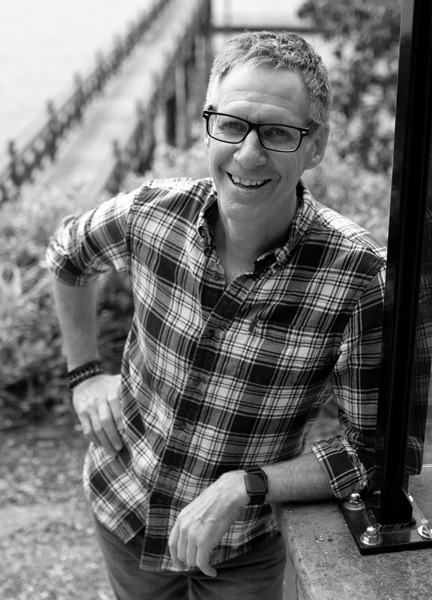
Guest Editor: L.J. Sysko
L.J. Sysko's work has been published in Voicemail Poems, The Pinch, Ploughshares, Rattle, Best New Poets, and elsewhere. She is the author of a poetry chapbook, BATTLEDORE (Finishing Line Press, New Women's Voices series). Poetry honors include several Dorothy Sargent Rosenberg awards, two fellowships from Delaware's Division of the Arts, and poetry finalist recognition from The Fourth River, The Pinch, and Soundings East. Sysko holds an MFA in poetry from New England College.
X: @lj_sysko
Instagram: @lesliesysko
Facebook: @lesliesysko
Author website: http://www.ljsysko.com

beach fall
for Holli and Terry
Mountain to stone, prairie to sand, redwood to ash,
from here I can see the heart of the sea, but not the beach
he fell on. I can see the picture
window you sit in—waiting, watching the shore, iPad in lap, short-haired
Flossy at your side, the one who dug your dad’s
water bottle from under him. I don’t know why
you brought his suitcase to his wake
empty—what it was between you. Only he knew the words
you could not say. The doctors’ words for you—non-verbal, spectral—sent him
back to rage. He said they weren’t worth the hair
on a dead chicken, that aut-ism was just too much self for them to take
from you. He knew what his raging
love could do: four hours a night on the couch, talking
through your iPad. He called himself Manitoban, the prairie farm-boy
who watched his dog run away for three days, the rain-man
to lead you out, teach you how to mouth the O, the awe
in Holli. Yes, from here I can see the redwoods
fall, the mountains decay, his sea-bed—
they say all the big hearts of the earth
love where they fall, that his heart stopped
before he hit the beach. But we both know
why his mouth was full of sand.
Christmas break
for Doug and Arlene
The earth heaves, the ice cleaves. Erosion
cuts the heart from every stone, while every night
I watch you drive your family past a starving glacier, turn
from a truck laden with salt. You head off
the head on, take the bumper to the heart, leave
your family straining your lungs’ last
words from the floor of the minivan.
I’m on the floor beneath my desk, straining
to plug in the phone that I will blame for years: why
did I plug it in? Every night
I watch the driver’s stoned eyes, petrified as your broken
daughters in the back. Every night
I piece you all back together: brake, I say, turn
over and over while the glacier leaves
its terminal moraine. I gather the stones,
offer them to the moon, last witness
to your last turn. I turn
to your wife, try to face her head on
with what the earth knows:
core to crust, mouth to lung
the rupture comes, the rupture
stays. Every Christmas
she wakes to the words
brake, turn.
doom eager*
because one of us
took a spike to the lung
a minivan to the chest
hit the beach with his heart
to say nothing of the one
whose only breath was broken water
because I believe
the hand, the wound, the moon
is how I show you where I fell
through the hole I thought I was
diving for pearls through the green
fuse of ice in my dream of you
because I run naked
through the forest on a moonless night
with a penlight in the hand that broke
my mother’s heart waning at the seed
of light the moon won’t show me
because its dark side calls all of us
because I believe
I’ll find your heart in the east
your marrow in the moon
fever just before the sun rises
I’ll swim for it all day forgetting
how the earth turns east south west
circling all night forgetting
there is no moon
in the new moon
because the only way out
is my hand on your chest
I walk the shore all night
dream back the back of the moon
because the only cure
for the wound
is the wound
*after Ibsen, Graham, Moore: an Icelandic term for the isolation, restlessness, caughtness an artist experiences when sick with an idea
Aug 23, 2023
Aug 23, 2023
30 min
A wonderful sense of wordplay permeates the poems we were able to discuss from Barbara Diehl. Sadly, one of three poems we’d flagged for the podcast was snapped up before our discussion was recorded, and we talk a bit at the start of this episode about our process and timelines. Barbara’s work gave us space to consider how word choices, sequencing, and combining can lead to new experiences in a poem, as well as a debate over the roles of joy and darkness in poetry, including the balance we seek as readers in the world we find ourselves living in these days.
This episode is brought to you by our sponsor Wilbur Records, who kindly introduced us to the artist is A.M.Mills whose song “Spaghetti with Loretta” now opens our show.
At the table: Kathleen Volk Miller, Jason Schneiderman, Samantha Neugebauer and Dagne Forrest.
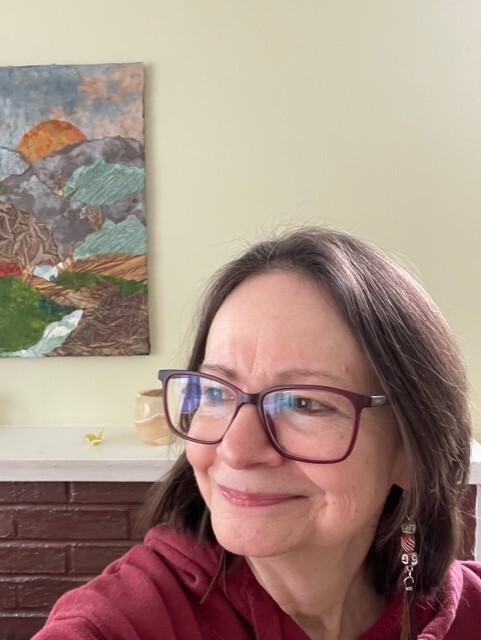
Barbara Westwood Diehl is senior editor of The Baltimore Review. Her fiction and poetry appear in a variety of journals, including Quiddity, Potomac Review (Best of the 50), SmokeLong Quarterly, Gargoyle, Superstition Review, Thrush Poetry Journal, Atticus Review, The MacGuffin, The Shore, The Journal of Compressed Creative Arts, Raleigh Review, Ponder, Fractured Lit, South Florida Poetry Journal, Five South, Allium, The Inflectionist Review, Switch, Split Rock Review, and Free State Review.
Socials: Twitter @BarbaraWestwood, Facebook @ barbara.w.diehl.3, Poets & Writers listing
December Goodnight
it’s sunfall, and the papersky is grayed
with erasures of bestlaid plans
all the daymistakes
forgiven
the brokenpencil points of planes
thumbsmudged away
their grumblechatter
hushed
the blackening windows
shuttered
*
so sleep in the nightsee
in the skylisten
so dream a planetdance
breathe a metronome
so keep time to a ticktock moon
to evening’s pocketwatch
its face a dozing chaperone
so humfade, so eyes closed
nothing to shudderfret
allsafe

Aug 9, 2023
Aug 9, 2023
41 min
In the midst of excitedly preparing for AWP 2017, we record this episode in which we discuss two poems by Rita Banerjee, “The Suicide Rag” and “Georgia Brown”
This week’s discussion both took us back and made sure that none of us would see the world the same way again. With images of breakdancing, gospel choir, and the not-so-innocent Georgia Brown, we were in it. Whether we’re distinguishing jazz from jazz or figuring out what a clapper is, this episode is filled with risky moves.
Join us in the campaign to have your local library carry lesser-known authors and small presses. Let us know what books you’ll be requesting with #getsomebooks! Let’s support libraries, small presses, and the authors who write for them.
Make sure you follow us on Twitter, Facebook, and let us know what you think of this episode with #longandskinny! Stay tuned to hear about our AWP 2017 experience–we hope to see you there!
And of course, most importantly, read on!
At the table: Kathleen Volk Miller, Marion Wrenn, Jason Schneiderman, Tim Fitts, and Sara Aykit

Rita Banerjee is the author of Echo in Four Beats, CREDO: An Anthology of Manifestos and Sourcebook for Creative Writing, the novella “A Night with Kali” in Approaching Footsteps, and Cracklers at Night. She received her doctorate in Comparative Literature from Harvard and her MFA from the University of Washington, and her work appears in Hunger Mountain, PANK, Tupelo Quarterly, Isele Magazine, Nat. Brut., Poets & Writers, Academy of American Poets, Los Angeles Review of Books, Vermont Public Radio, and elsewhere. She is the co-writer of Burning Down the Louvre, a forthcoming documentary film about race, intimacy, and tribalism in the United States and in France, and serves as Senior Editor of the South Asian Avant-Garde and Creative Director of the Cambridge Writers’ Workshop. She received a 2021-2022 Creation Grant from the Vermont Arts Council for her new memoir and manifesto on female cool, and one of the opening chapters of this memoir, “Birth of Cool” was a Notable Essay in the 2020 Best American Essays. She is an Assistant Professor of Creative Writing and Director of the MFA Program for Writers at Warren Wilson College.
The Suicide Rag
Billy played ragtime
on the church
organ but we
lunch hour kids,
kept time by another
name. Behind St. Augustine’s
we learned to hit
the pavement, sound
like an anvil
crack
hammers hitting
steel, Billy playing
skeletons
on the fifth,
we arpeggioed
haloed, froze
on the black
top. Learning
to cakewalk
This was our
battle—
tar-mat babies
doing handsprung
suicides
for the girls
standing ’round
with knife-like eyes
That’s all
we needed—
a rolling
beat, a firing squad
and schoolyard
skirts
scouring the lot
as we fell
face forward
hands locked
& stiff, the only
thing
that could’ve
come between
us was a kiss.
Georgia Brown
Harlem had yet to be born,
the globe had not been spun,
but we knew how to whistle,
how to call clappers and skirts on cue:
That summer, we first met Georgia,
she was an echo in four beats,
we learned to hum her story.
Mike played her with a licked reed
but she was all brass, sharp
like an abandoned railroad cutting through
wild wood, and when she took stage,
she made those trombone boys whisper,
“Sweet Georgia, Sweet.”
Jul 24, 2023
Jul 24, 2023
52 min
July 2023 Update: Sarah is preparing to appear at the New York City Poetry Festival at the end of July. Sarah will read a poem and be interviewed as part of an appearance with the monthly poetry show "There's a Lot to Unpack Here". Sarah also has a new book of poetry, “The Familiar”, coming out from Texas Review Press in Spring 2024.
Welcome to Episode 19 of Slush Pile! For this episode, we have two “creepy” poems submitted for our Monsters Issue by Sarah Kain Gutowski.
Listen to the outcome, but one thing is for sure: these poems are stronger together.
Comment on our Facebook event page or on Twitter with #frogtongue and sign for our email list if you’re in the area, and even if you’re not! Read on!
At the table: Kathleen Volk Miller, Lauren Patterson, Tim Fitts, Caitlin McLaughlin, Jason Schneiderman, and Marion Wrenn
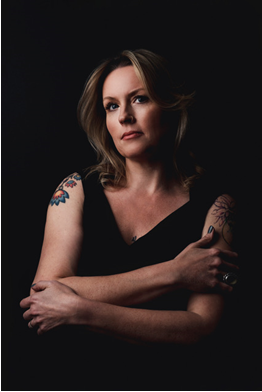
Sarah Kain Gutowski is the author of two books, The Familiar (forthcoming) and Fabulous Beast: Poems, winner of the 14th annual National Indies Excellence Award for Poetry. With interdisciplinary artist Meredith Starr, she is co-creator of Every Second Feels Like Theft, a conversation in cyanotypes and poetry, and It's All Too Much, a limited edition audio project. Her poems have appeared in The Gettysburg Review, The Threepenny Review, Painted Bride Quarterly, and The Southern Review, and her criticism has been published by Colorado Review, Calyx: A Journal of Art and Literature by Women, and the New York Journal of Books.
Chapter VI: The Children Have a Request
The season stretched itself thin, weakened by storms and heat.
Inside the damp, shadowy space of the children’s fort,
the woman with the frog tongue wove baskets and bowls
with tight, interlocked laces, while her silk stitches
began to fray and lengthen. The gap between her lips
widened to where the children could see the white of her teeth.
They stared at her, sometimes; she saw them clench their jaws
and try to speak to each other without moving their mouths.
Before long they’d begin to laugh, and she’d shake with relief at the sound.
Then one day, when the trees broke into glittering shards
of gold and red and green, and light spun pinwheels above
their heads as they walked together between the falling leaves,
the girl looked at the woman and asked if she had a name.
At this, the woman jerked to a stop. The old surge,
the impulse to speak that rose within her belly and chest,
overwhelmed. She wanted the girl and boy to know her name.
Her tongue, rolled tightly and barred from moving inside its cage,
strained against her teeth and cheeks, contorting her face with its rage.
The boy stepped back when he saw the change on the woman’s face.
The girl moved closer, though, to pat the hand she held
like she might a frightened kitten or skittish, fallen bird.
Let’s guess your name, she said. The woman’s jaw fell slack,
as much as the stitches allowed. Her panic passed away.
The boy saw her relax and began to hop around.
A game, a game, he chanted. Across her eyes the sun
sliced its blade, and though her vision bled with its light,
she felt cheered by the girl’s hand and the boy’s excitement.
Aurora. Jezebel. Serafina, guessed the girl.
Her brother laughed and grabbed a fallen branch, whacking
the moss-covered roots of the trees surrounding them.
The woman laughed, too, short bursts of air through her nose.
Her happiness shocked them all. The boy laughed again,
a raucous sound, and she looked the little girl in the eye.
A curve tested her mouth’s seams, more grimace than grin,
but the girl smiled back and sighed with some relief. Then she reached
toward the woman and pulled her close, until they were cheek to cheek.
The girl’s face, cold and smooth, smelled of the moss and earth
her brother lashed and whipped with vigor into the air.
The woman with the frog tongue hugged the girl loosely,
as if those little shoulder blades were planes of cloud,
a shifting mist she could see and feel between her arms
but couldn’t collect, or hold, or keep for her very own.
The girl stepped back yet kept her hands by the woman’s face.
Her small, thin fingers hovered before the fraying threads.
Why don’t you take these out? she asked, as she touched each ragged end.
At this the boy stopped his joyful assault of the trees
and ran to see for himself what they discussed each night
when walking home: her muffled, choked murmurings,
the gray lattice unraveling across her mouth.
He peered closely at each loose stitch, searching beyond
her lips for whatever monster she’d locked so poorly inside.
He found no monster, just a hint of pink tongue.
So he shrugged, said Yes, and spun on his heel to resume his game.
The girl jumped up and down, shouting: And then you’ll tell us your name!
The woman watched the boy whip tree roots free of moss,
the tufts spinning into the air and separating,
becoming dust, the dark green spores like beaks of birds
that plummet toward the rocky earth without fear.
She watched the girl’s hair lift and fly away from her head,
the wind dividing its strands, the way it hung, suspended
like dust in the sun, then sank like spores: a sudden drop.
She worked her mouth from side to side, and by degrees
opened her lips enough to burble a sound that said: Maybe.
Chapter VII: She Grows a Second Heart
That night she woke to find another oddity:
during sleep her heart had split or twinned itself,
and where one muscle pumped before, now beat two.
Her blood coursed through her veins twice as fast as before,
and over those paths her skin buzzed and stammered, like wire
strung tautly between two poles and charged with load.
As if she’d run for miles across rolling hills,
as if inside her chest two fists beat time all day,
beneath the bone she sped at death in the most alive way.
The day crawled while her two hearts raced. Above the fire
she set a series of clocks to ticking. She watched the flames,
sometimes leaning close enough to feel the heat
singe her stitches a deeper shade, their fibers scorching
until they curled, like dark froth spilling from her mouth.
But when her hearts began to flicker more, and faster
than she could stand, she turned her eyes to the clocks’ marked faces
and drew comfort from the second hands’ neurotic twitch.
Every minute witnessed meant another minute lived.
Beneath her breastbone her strange second heart pulsed harder.
She sensed the muscle, like her tongue, would leap and fly
away from her body if her body let it go.
She took the silver-handled knife and incised a cross
above the cavity where her hearts ballooned together,
jostling for room and dominance. The flaps of skin,
pale as egg shell, trembled slightly. A head appeared.
A bird with obsidian eyes emerged wet with her blood,
shook to shed its burden, and leapt toward the rafters above.
She watched the bird and felt air seep into the space
it left behind, her single heart unrivaled but lonely
in its great room. The wound bled slowly, healing fast
to a pale silver scar, flaps falling back to close
neatly over the bone, which laid itself again
like lines of track or scaffolding across her chest.
The bird flew to the window’s sill, and ticked its head
to look back at the woman. A slight breeze, cool and calm,
caressed its dark wings, and it leapt for the steady branch of that arm.

Jul 19, 2023
Jul 19, 2023
5 min
In this short trailer, we tease the next three poets to be featured on the Slushpile: C. Fausto Cabrera, Barbara Westwood Diehl, and Jodi Balas. We are so excited to be featuring poetry from these three very diverse writers. Have a quick listen for a taste of each poetic voice! (And remember – we pull our featured poets and writers from our submissions slushpile – polish up your work and submit it to Painted Bride Quarterly, knowing we might choose to feature it here!)
This episode is brought to you by our sponsor Wilbur Records, who kindly introduced us to the artist is A.M.Mills whose song “Spaghetti with Loretta” now opens our show.
At the table: Kathleen Volk Miller and Dagne Forrest

Jun 7, 2023
Jun 7, 2023
29 min
What were you wearing in the ‘90s, Slushies? Sleeveless flannel and crochet? Paco Rabanne? We’re beguiled by Emily Pulfer-Terino’s poems on this episode as we discuss how she slides us back to the ‘90s. She has us sniffing magazine perfume inserts and marveling at the properly cranky voice she invokes for an epigraph, borrowed from Vogue’s letters to the editor. What were we thinking wearing all those shreds? Only the girls on those glossy pages know for sure. For more context, check out Karina Longworth’s excellent podcast, You Must Remember This, and her recent deep dive into the bonkers eroticism of the 1990s. Plus, Sentimental Garbage’s episode on Dirty Dancing featuring Curtis Sittenfeld.
For a great collection of poems that draws its title from grunge-era jargon (kinda, sorta, wink, wink), we recommend a book we love by our pal Daniel Nester: Harsh Realm: My 1990s.
This episode is brought to you by our sponsor Wilbur Records, who kindly introduced us to the artist is A.M.Mills whose song “Spaghetti with Loretta” now opens our show.
At the table: Jason Schneiderman, Marion Wrenn, Kathleen Volk Miller, Samantha Neugebauer, and Dagne Forrest
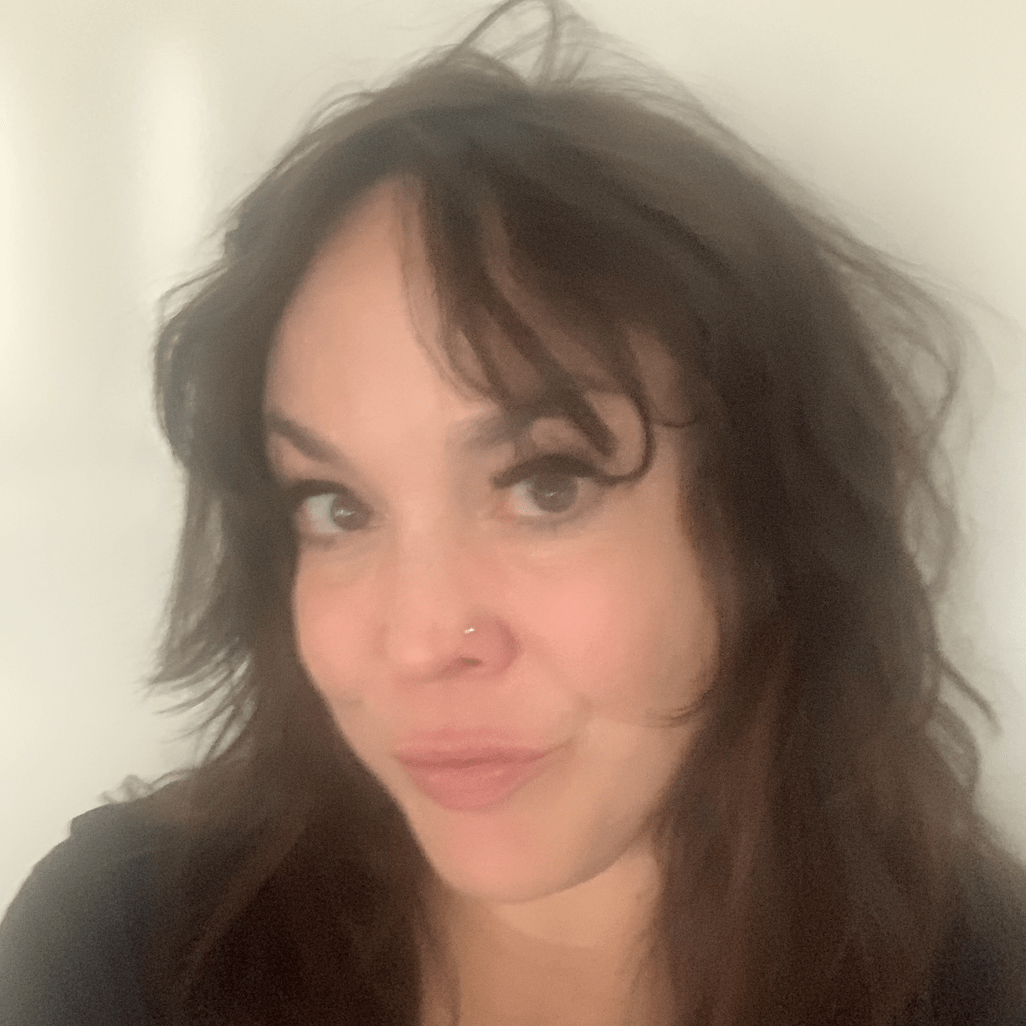
Emily Pulfer-Terino is a poet and writer whose work has appeared in Tupelo Quarterly, Hunger Mountain, The Collagist, The Southeast Review, Poetry Northwest, Stone Canoe, The Louisville Review, Juked, and other journals and anthologies. Her poetry chapbook, Stays the Heart, is published by Finishing Line Press. She has been a Tennessee Williams Poetry Scholar at the Sewanee Writers’ Conference and has been granted a fellowship for creative nonfiction at the Vermont Studio Center. She holds an MFA in creative writing from Syracuse University, and she lives in Western Massachusetts.
Author website: http://emilypulferterino.com/
Instagram: @epulferterino
Grunge & Glory
“You’re kidding. Tell me you’re kidding. At least I’ll know where to find my new wardrobe this year...in the nearest dumpster…talk about the Emperor’s New Clothes. Tsk, tsk.”—(Letter to the Editor)[1]
What’s more glorious than a girl in a field,
curled in the whorl of a deer bed, alfalfa
haloing her dreams of fashion magazines
while she plies matted hay, untatting her world?
Bales score the landscape, parceling
endlessness, parsing this solo tableau,
while her heroes wrench their music
into being in Seattle, gray, time zones away.
What’s grunge if not her dense crochet
of castoff couture curated from dumpsters
and worn with a frisson of pride and shame:
flowering nightgown, old ski boots, sweater
turned lace in places by moths and age?
And this field like where models pose
in Vogue, each page itself a piece of land
and an ethos framed inside a storyboard.
Scala Naturae
Like prying pods of milkweed
so those astral seeds effuse—
unseaming magazine ads for perfume.
Anointing my wrists with scented glue,
running each over the edge of a page,
testing scents I aspired to buy
and classifying my olfactory taxonomy.
Grass evoked the world I’d known
with hints of rain and magnolia
slight as fog above an unmown field.
DNA’s rosemary, oakmoss, and mint,
ancient and clear as purpose; glass
spiraled bottle signifying sentience
and enduring iteration. Both
ethereal and hyperreal, Destiny
offered apricots, orchids, and roses--
bottle opaque as an eyelid,
veil of petals sheer as promise.
Samsara was amber, sandalwood,
ylang ylang, peach. Syllabically lulling,
its s and a extending, repeating, suggesting
endlessness. Cycle of birth and death
rebranded as serenity in ongoingness.
Angel’s burst of praline and patchouli
lit the crystal facets of that star,
making heaven of my pulse and ordinary air.
[1] Wynne Bittlinger, letter to the editor in Vogue US, February 1993

May 24, 2023
May 24, 2023
29 min
Finding flow in modern life is increasingly challenging, Slushies, but we sure found it here in two poems by Erica Wright. Loosely defined as the melting of action and consciousness into a single state, flow in poetry allows us to fully inhabit the world or experience conjured up by the poet. Nothing serves to distract or pull the reader out of the poem. How do we get there? There isn’t just one way. It helps when the poem’s form is attuned to the pacing required by the subject matter or focus. Strong beginnings always help -- and there are two fantastic ones here -- as well as a system of imagery that’s both relatable and unexpected. In “Marine Biology”, we see a conversational style used in parts of the poem that’s deeply grounding, and in “Too Many Animal Stories” the poem’s form supports its dense mosaic of images and moments.
This episode is brought to you by our sponsor Wilbur Records, who kindly introduced us to the artist is A.M.Mills whose song “Spaghetti with Loretta” now opens our show.
At the table: Kathleen Volk Miller, Jason Schneiderman, and Dagne Forrest.
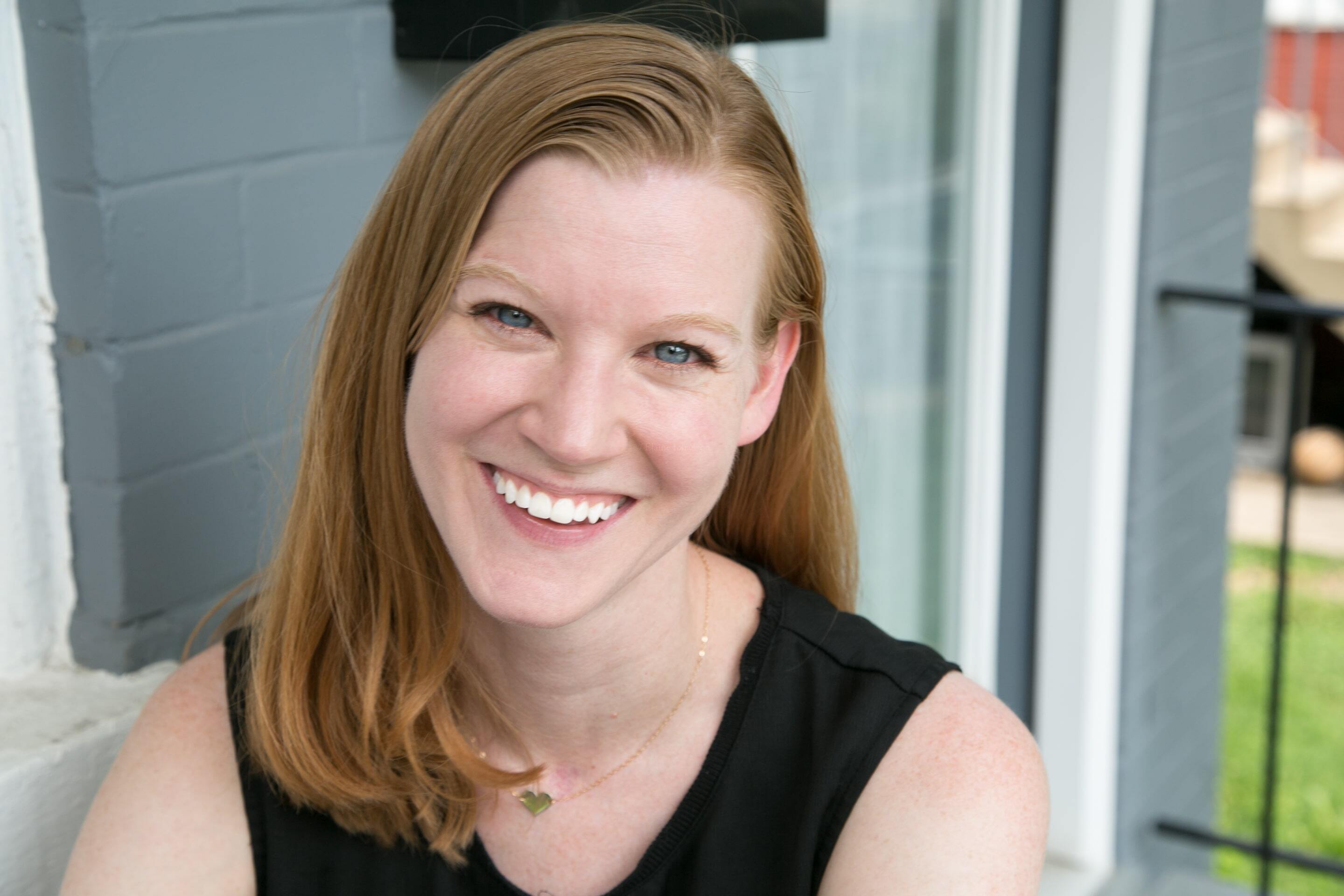
Erica Wright's latest poetry collection is All the Bayou Stories End with Drowned (Black Lawrence Press). She lives in Knoxville, Tennessee with her family where she enjoys looking at the mountains and not camping in them.
Socials: Twitter @eawright, Instagram @ericawrightwrites, Facebook @ericawrightauthor, Author website
Marine Biology
Not even my dog knows me, hovers
outside the bathroom as I wash blood
from the porcelain, wipe up the floors.
I feel more at ease with the mess
than the pain. We’re not supposed to
talk about that anyway, my fleet
of would-be mothers who never labored
but birthed something too.
Mine half-seahorse, half-anemone
like something you’d find in an off-season
coastal gift shop after looking for whales
and not finding any whales.
And now my skin turns blue
as if my veins are submarines
surfacing after too long underwater.
Did you know the Navy studies sharks
in hopes of making better ships?
Can you imagine? Mariners on megalodons.
Let’s name them after our ancestors.
Let’s hold the notion of them
inside our heads until they’re real.
Too Many Animal Stories
In the same town where a man’s gun discharged,
killing a woman across the street, we ordered
sandwiches and watched tourists rent inner tubes
to hold their bodies up in the river below.
I’ve been sick for weeks now, bad sick
at first, and now I can hold myself up.
You started grinding your teeth at night,
and it hurts to move your jaw in the morning.
We joke about low points. We joke
about how we’ll never leave this house again.
Of all the days to miss, I can’t say why
I latched onto that one in Helen, Georgia.
We find a movie about the Trans Am Bike Race,
and I make a joke about my dad’s old car
with a phoenix on the hood, its wings
spread with such precision that they never spilled
over the sides. Sometimes a snake hid underneath
and was so long it could stretch its body
from one side of the two-lane road to the other—
tail in one ditch, head in the other—
a perversion of that joke about the chicken.
The thing about being sick while the world has stopped
is that I start to wonder if it’s all a carousel game,
and we’re being punished for trying to jump off.
When I push myself off the bathroom floor again,
the tiles won’t stop spinning. Asbestos.
I remember the real estate agent warned
us about asbestos and not to take them out ourselves.
I like the bathroom. The porcelain tub feels like ice
when I rest my head against the side, wait for stillness.
You take out the trash for us because of the rats.
I don’t mind them, but once when one ran
across my foot, I couldn’t get clean enough after.
The neighbors coo over our new dog,
leave chicken bones for her, which we pry from her teeth.
Sometimes the incisors scrape my skin, and she never
apologizes for her nature. I apologize for mine
all the time. I’d prefer to be hearty, the kind of traveler
who could take a cross-country train alone
and sleep sitting up, living on trail mix and Coke.
Not the one who needs sea bands. They sound like
the bracelets of some strong-willed mermaid
who doesn’t care what anybody thinks of her,
but they’re cheap elastic with plastic eyes.
Outside my window, the wind harasses the trees
and their new leaves, which are less impressive
than the old ones. Last year, a grim lived there,
and I’d make up stories for him before bed.
Not that he slept. Not that I know of.
There once was a hellhound who loathed
the predator rigamarole. He disliked
the rending of flesh and gnawing of bones.
The howling he could take or leave.
One day sheep wandered below him.
They smelled of honeysuckle and dirt.
They didn’t bite each other then pretend
they were joking. He sewed his costume right away.
There’s not much more I can say about the rat
from earlier. He fell from a trash bag
and leapt at me, tiny claws digging into my shoe.
A medium-sized rat. They say they’re more
afraid of us than we are of dying.
May 10, 2023
May 10, 2023
51 min
For a really fresh take on obsession, take a look here Slushies! Lisa Gordon’s short story is a masterclass in taking a popular form and quietly exploding it (pun intended). By turns deeply human, comical, sad, and just a little bit “out there”, Gordon’s story sweeps alongside a protagonist whose undying love for civilian astronaut Christa McAuliffe drives a story with the hallmarks of space exploration. NASA’s obsessive attention to detail, understanding of real world factors, and commitment to thinking outside the box are shared by Gordon, who tells a surprising and rewarding story. You might want to jump down the page and read or listen to it in full first, as there are spoilers in our discussion!
Listen to the story Paul on Earth in its entirety (separate from podcast reading)
And in the spirit of confession that permeates this story, our team is confessing their obsessions:
- Kathleen Volk Miller – podcasts and keeping her wine racks full (purely for aesthetic reasons!)
- Jason Schneiderman – the original Doctor Who series (1963-1989), keeping it old school!
- Marion Wrenn – onion dip (very hard to find in Abu Dhabi, so it’s her go-to when she’s Stateside!)
- Samantha Neugebauer – old tin boxes
- Dagne Forrest – space exploration and marzipan
You might want to read these related links:
Christa McAuliffe and the 1986 Challenger explosion
The Week in Longing, Dagne Forrest on Rust+ Moth (a recent poem by one of our editors that references the Challenger explosion and the late 2022 recovery of a piece of the shuttle off the Florida coast)
This episode is brought to you by our sponsor Wilbur Records, who kindly introduced us to the artist is A.M.Mills whose song “Spaghetti with Loretta” now opens our show.
At the table: Kathleen Volk Miller, Jason Schneiderman, Marion Wrenn, Dagne Forrest, and Samantha Neugebauer, as well as technical team Ta’Liyah Thomas, Anthony Luong, and Sebastian Remetta
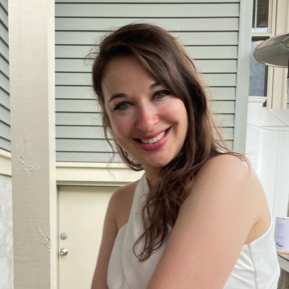
Lisa Gordon's short fiction has been published in Paper Darts, ANMLY, Hypertext, Storychord and elsewhere. She lives in the Boston area and is working on two novels.
Paul on Earth
Paul had a hard time concentrating on the wedding. Maybeth had tears in her eyes, but then again, she cried at everything. The rabbi was saying words about how important trust is when it comes to love. Maybeth took his hands. She had nice, soft, small hands—Paul always liked that about her. She could do a lot with those hands: not least of which, much earlier in the morning, even though they weren’t supposed to see each other until the wedding (Maybeth had wanted it that way) he knocked on the door of her hotel room. Tap tap, tap tap, tap tap, so she would know it was him. He needed her, he said. He needed her to touch him. And she did. And he’d felt better, but only for a moment.
He still couldn’t get Christa out of his mind.
He still looked her up. Often. All the time, you might say. It had been years since 1986, but still—she was a household name. Christa McAuliffe. The whole thing had affected everyone, especially school children. It was one of Ronald Reagan’s most celebrated speeches, and he’d been a former movie star! Not that most people remember that. Now, there’s a show about it on Netflix. He still hadn’t watched it. He couldn’t bring himself to do it.
She was still alive inside him like a constellation, burning layers through his skin. And now he was getting married, again, to another very, very nice lady. She knew everything, and she forgave him. He was getting a chance to start over.
“Paul, Maybeth, do you take one another?” the rabbi said.
“I do,” Maybeth said, squeezing his hands.
“Yes,” Paul said. “I mean, I do. Yes.”
Little lines crinkled adoringly around Maybeth’s eyes. Her eyes were the color of limestone.
“Then it is my honor. To announce. You as husband and wife, to one another.”
The guests roared as ceremoniously as a small crowd can, gathering to their feet, a wave of low thundering applause ebbed and flowed as they kissed. Paul knew next to none of them, but luckily, Maybeth had many friends. She was liked by many people, unlike Paul. It was one of the things Paul told her when they first met: I won’t bring much to your life. I’ve tried to change but—
She had interrupted him. “That’s for me to decide.”
Maybeth’s lips were slick with lipstick and he worried, for a moment, he’d look like a clown. But he could feel her smiling through her mouth, through her kissing, and she kissed him with abandon, and he let her. He loved her. He really wanted to love her.
* * *
Paul was 15 when Christa McAuliffe was his teacher, and he fell for her like a rocket burning through the universe. (It was a cheap analogy, he knew that. It was cliché, obvious. But it was how he felt.) She was so pretty—! Just so, so pretty. All the school boys seemed to like the girls with big hips and big hair and pink mouths, always open. It was the early 80s, after all.
But not Paul. It was Mrs. McAuliffe, with her brown eyes wide as planets, her tall teeth, her curly hair, she was—well, she was a lot of things, but mostly, she was the mother figure he’d needed at the same time his sexuality was burgeoning, so she represented the classic oedipal complex, except a little inverted, for Paul. At least, that’s what he was told in therapy, later in life. It seemed true enough. He accepted it. But he couldn’t change his behavior.
His behavior didn’t take hold until after the explosion. She wasn’t even his teacher then—she’d moved on to another school, and Paul was floundering without her presence to steady him. To give him something to look forward to. But it was after that when his obsession really bloomed. He was devastated for her two children. Of her husband, he was fiercely jealous—jealous that he got to be the husband, even after she’d died. Jealous that he could mourn, really mourn. He called their house often, back then. He’s not proud of it, but he did it. He got to know the sounds of all of their voices: the little girl’s, the young boy’s, the husband’s. Lots of people were calling then, obviously. It wasn’t too invasive. But they did change their phone number, later. Unlisted, of course. Paul was saddened. Deeply.
Back then—then being, before the internet—there was only so much he could do. Newspapers stopped reporting. He kept copies of some of the ones he could find, the issue of People Magazine with her face on it, and the like. He kept them in a notebook. He went to college. He went to class. He tried to connect his obsession with the idea that maybe he was obsessed with space—! Yes, that had to be it! He majored in astronomy, but he just couldn’t take to it. It was too mathematical. Too science-oriented. Christa had been his English teacher. It was escapism, he preferred. He graduated with a degree in Literature and asked Sandy to marry him. It was what you were supposed to do. She expected it, but she was happy, very happy. They lived in a little apartment in Boston for a few years, while she finished her Masters’ degree at BU. He took a teaching job in a small town called Concord, west of Boston, in—what else? English. It was not lost on him that Concord—albeit, New Hampshire—was where Christa was from. And he’d learned that she’d lived for some time in Framingham, Massachusetts. It was not far from Concord, not far at all. He spent his days driving around strange neighborhoods, aimlessly, wandering, or in the parking lot of the high school she’d attended, which was still there. He told Sandy he’d started a chess club for his students. He’d never played chess in his life, but she believed him.
That was all for a long, long time. He was happy enough. He enjoyed teaching, though he feared he wasn’t very good at it. When he closed his eyes, he could still see Christa’s back, the way her arm would raise to the chalkboard, how her writing made a pleasant sound. Tap tap, tap tap. He’d developed some decent cooking skills, and Sandy baked, and they ate well. They made love occasionally, and then frequently, because Sandy wanted badly to have children. Paul was thankful that they were inexperienced lovers—they’d only really had each other—and didn’t know that he didn’t touch her the way a man does when he loves a woman. When he’s in love with her. But after a year or so, the test results came back with bad news: she wouldn’t be able to bear children. And she stopped turning to him in bed. And Paul found that he was pleased. It allowed space in his mind for the obsession to grow. And grow, grow it did. It was like a whole other place in his mind he could turn to, retreat into: he could go into different parts of Christa’s body and inhabit them, and they were in love in a way that didn’t exist on Earth—it was unique to them, and them only, and it was everything; it was his world.
Years passed. Years upon years. Until finally, one day, he was arrested. A little girl in the town of Framingham, Mass. had been abducted. She’d been missing for three days and discovered later, in the conservation land lining the towns’ perimeter, murdered, sexually abused. Such an awful, tragic thing. Paul had been seen too often in her neighborhood, and others nearby, idling around in his brown Pontiac, a stranger. His likeness matched the description of the abductor: tall, glasses, a non-descript male. He was taken to the station and questioned for hours.
He was bewildered. Truly and simply bewildered. He wouldn’t have known where to begin, is what he said.
“Where to begin with what?” the detective had said.
“With stealing a child,” Paul had whispered. “With touching a child.” He clasped and unclasped his hands.
Yes, he’d been around the neighborhood. Often, on and off, for years. No, he had no business there, knew no one, not a soul who lived there. No, he had no alibi—he had, indeed, been driving around that very night. He’d been lying to his wife for so long he’d begun to believe there was a chess club. The only way out was the truth.
“McAuliffe,” they’d said. “The teacher astronaut lady? The one who got blown up?” The detective. A lawyer. Repeated it, as if they hadn’t heard him right. Couldn’t have possibly heard him right.
“Yes,” Paul said. “That’s the one.” He told them about the file he kept in the magazine in the downstairs bathroom. They sent a squad to get it, and his wife followed behind, hysterical. The questioning was relentless. He was shoved in a cell for 14 hours. Eventually, they found the right man. He’d committed a similar crime in Western Mass., in the Berkshires. They opened the door to his cell and he was free to go. But they recommended he get therapy.
“We think you’re a little nutso,” one of the policeman said, on his way out. Behind him, echos of laughter. He started his car—it sputtered and died. It was a freezing, gray day in November. Sandy wouldn’t pick him up. He tried to hitch, but no one would stop for a man who looked like the man who abducted children. Eventually, he called a cab. It cost him $143 to get home, and, not having that kind of money on him, the cabbie had to drive him to a bank. He watched the cabbie eying him in the rearview mirror as he peeled away.
Sandy left, which didn’t surprise Paul in the slightest. What did surprise Paul was how little he cared. Somehow, they didn’t fire him. He’d thought they would have, but they didn’t. (“You didn’t commit the crime, Paul,” the principal said, disapprovingly. As if he’d wanted him to have been the criminal.)
His time was his own, finally. He couldn’t drive around the way he used to, which left a void in his life he wasn’t sure how he’d fill. But it turned out, it wasn’t as hard as he thought. He grocery shopped and cooked elaborate meals, gaining weight, filling out in places he didn’t think could grow. He masturbated on the couch as he pleased. He read different books and grew excited by new lesson plans. He even became energized by teaching in new ways. His life, it seemed, was changing. Christa was there—she would always be there—but he needed her less and less.
But then, as if out of nowhere, the internet became faster and stronger and more ubiquitous, and suddenly, the world was at his fingertips—anything he wanted could be his, information of any kind—and, well. Life took on new meaning. He bought a printer. He printed everything. He posted the photos, the articles, up around his house, a shrine. He was scared of himself. His teaching suffered. He stopped eating. He was fired. He’d hit rock bottom. And then, one day—it really was like that, just one day—he saw an advertisement for Addicts Anonymous. Whatever you’re addicted to, we can help, is what it said.
Paul went. He didn’t know what his life had become and he didn’t want to give up, not yet. He was 40 years old. His father had died long ago. Sandy had moved to Virginia, adopted a daughter, gotten a dog. He drove to the meeting, concentrating on the way the cold winter air felt in his lungs. And at the meeting, he met Maybeth. She was addicted to painkillers. She was a tiny, cute thing. Sprightly. Energetic. “But I have a dark side,” she said, when she spoke to the room. She’d been watching Paul carefully. He could feel it, even when he turned away. After the session, she approached him. “I’m looking for a new boyfriend,” she said. “Addictions don’t bother me.”
“Even mine?” Paul had said.
“Even yours,” she had said.
He’d addressed the room—all 27 of them (he’d counted) and he’d said, “Hi, I’m Paul. And I don’t know why. Or maybe I do. But—and sorry if this freaks anyone out—I’m addicted to Christa McAuliffe.”
There’d been chatter, a couple of laughs. Some of them looked at him quizzically. He heard someone whisper to someone else “Challenger”. And he’d felt very much like crying. It was the first time he’d felt like crying in—well, maybe ever. Since he could remember. And it felt like being opened, like a present.
When he told that to Maybeth, she cried. “I’m your present,” she’d said. “And you’re mine.” She smiled into his neck and curled up in his lap like a little dog. Paul held her. Never had his arms been so full. He closed his eyes and tunneled through space, slowly at first, just exploring, until he was rocketing through her again, ready to find what he was looking for.
Apr 24, 2023
Apr 24, 2023
1 hr 1 min
We are enswirled in this episode, Slushies, enswirled! We discuss three poems by John Sibley Willliams, two of which are ghazals. Williams’ poems are the gravitational force around which our conversation about craft, form, fluidity, identity, and the flux and spaciousness found inside poetry spirals. Williams’ poems draw the swirl of our attention not only to the choices he makes on the page but to Agha Shahad Ali’s rules for real ghazals, Williams’ poetic conversation with Tarfia Faizullah, and his nod to Kavek Akbar’s “Gloves”. There is a pun these show notes want to make about guzzling ghazals, Slushies, but we are trying hard to resist it…
At the table: Marion Wrenn, Jason Schneiderman, Kathleen Volk Miller, Dagne Forrest, Samantha Neugebauer
This episode is brought to you by one of our sponsors, Wilbur Records, who kindly introduced us to the artist A.M.Mills, whose song “Spaghetti with Loretta” now opens our show.
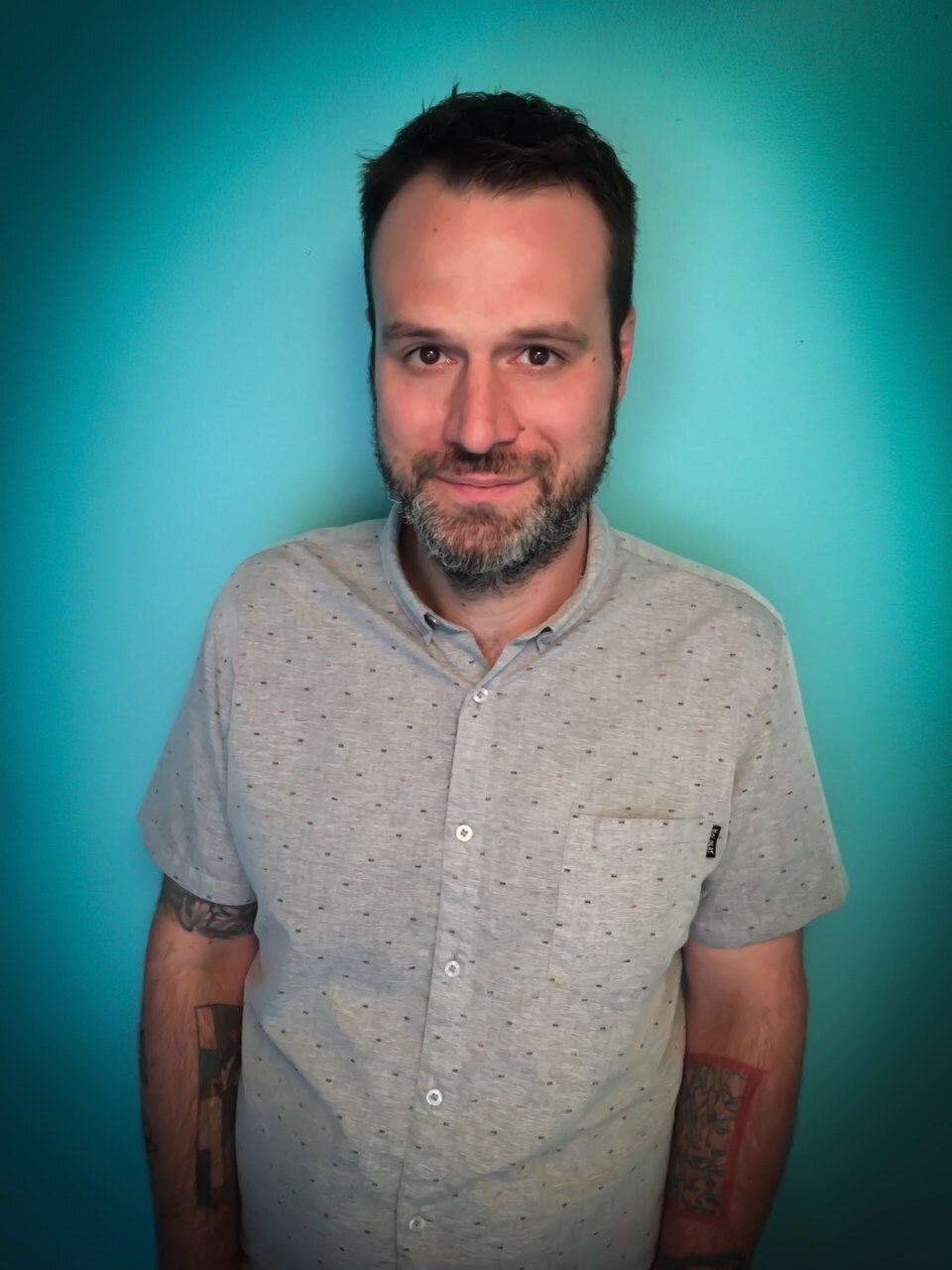
John Sibley Williams is the author of nine poetry collections, most recently Scale Model of a Country at Dawn (Cider Press Review Poetry Award) and The Drowning House (Elixir Press Poetry Award). He serves as editor of The Inflectionist Review, Poetry Editor at Kelson Books, and founder of the Caesura Poetry Workshop series. He lives in Portland, Oregon with his partner, twin biracial six-year-olds (one of whom is beautifully transgender), a boisterous Boston Terrier, and a basement full of horror movie memorabilia.
Author website, Facebook @ john.sibleywilliams
Ghazal for Transparency / for Reflection
My ghosts breathe accusingly—a winter mass, a mirror’s impermanent
erasure—again shaving I’m sorry from the face over my face in the glass.
It’s not just the birds—their abridged flight, the stains the sky wears today
through this washable window—but my children’s tiny hands absolving the glass.
Of guilt? Of shame? Is it his blood raging generations through my veins or this white-
washed silence compelling me to pull our history, face-by-face, from its frames of glass?
All this uneaten grain filling silo after silo—always at dusk, in my mind—swarmed now
with mealworms & mites & someone else’s hunger. How it cuts the tongue like shards of glass.
& those goddamned honeycombs, failing again. How our neighbor’s unable to keep his bees
close enough to cultivate. Our house too is a small box of dust & wing & against the glass
separating us from the world curtains blur our reflections like rain. Like stars cutting through
cloud, a sustainable song. May my girls never be dead enough to fear themselves in our glass.
Ghazal Beginning & Ending with Lines from Tarfia Faizullah
Let me break free from these lace-frail microscopic bodies.
My breath (always shared); trace it back to unmasked foreign bodies.
Taking that last winter deep into her lungs. Breathe, I remind her.
& remember me a child, Mom, not this unrecognizable foreign body.
The sky’s aperture widens. Sight ≠ witness. The organ’s rusty song catches
in the rafters (unascended). & all this rain leaking down on us like foreign bodies.
Grey fox. White cells. Families fleeing one home for (hopes of) another.
Some borders, perhaps, are meant to be trespassed by unforeign bodies.
Row after perfect row = harvest. Harvest ≠ everyone is fed. Sated. Breaking
up from the earth beneath, star thistle & bindweed. To us, foreign bodies.
The day an autumn orphan, & we’re yanking roots. My daughter’s tiny
misgendered fingers in mine, (pulling. Together), no body is foreign.
Field of Anchors
— for Kaveh Akbar
Darkness on both sides.
& wild grasses. Sun-hurt.
Browning. So as not to drift.
Too far from shore. A man.
Palms the tiny church inside.
The warm casing. Inside a god.
Prays to another god. For more.
Of himself. More devotion.
One more detonation. Of roses.
Less blood next time. Less field.
Without end. Or is it more.
That’s required to make a mirror.
Of each window. All that untilled light.
All that goddamn reflection.
The old maple out back. No longer.
A noose swinging from it. Lifts its arms.
In praise of its leaves. Fallen & otherwise.
Only a god. My grandmother promised.
Can beat the trees. Of its birds. Can lullaby.
The field into paradise. Only fear can.
Halleluiah the anchors from their green.
Deerless. Wolf-filled. Moorings. Or is it.
Love. When I open the front gate. Rusting.
Still. Despite drought. Despite me. I hear.
My children playing with. The blood inside.
The roses. Inside the bullet. An impossible anchor.
A darkness. That gives a people. Its name.
Apr 10, 2023
Apr 10, 2023
33 min
Are you ready to get primal, Slushies? We look at poems of birth and mothering that call on the senses as they shift between what’s animal and what’s human in us. Kathy celebrates the pure, messy pleasure of a classic tomato sandwich and Jason reminds us why an irregular opening line can be the hook a poem needs, while we all marvel at a poem’s ability to dazzle us with changing perspectives, locations, and personas. Oh, and strong titles get some much deserved love too.
This episode is brought to you by our sponsor Wilbur Records, who kindly introduced us to the artist is A.M.Mills whose song “Spaghetti with Loretta” now opens our show.
At the table: Kathleen Volk Miller, Jason Schneiderman, Samantha Neugebauer, and Dagne Forrest
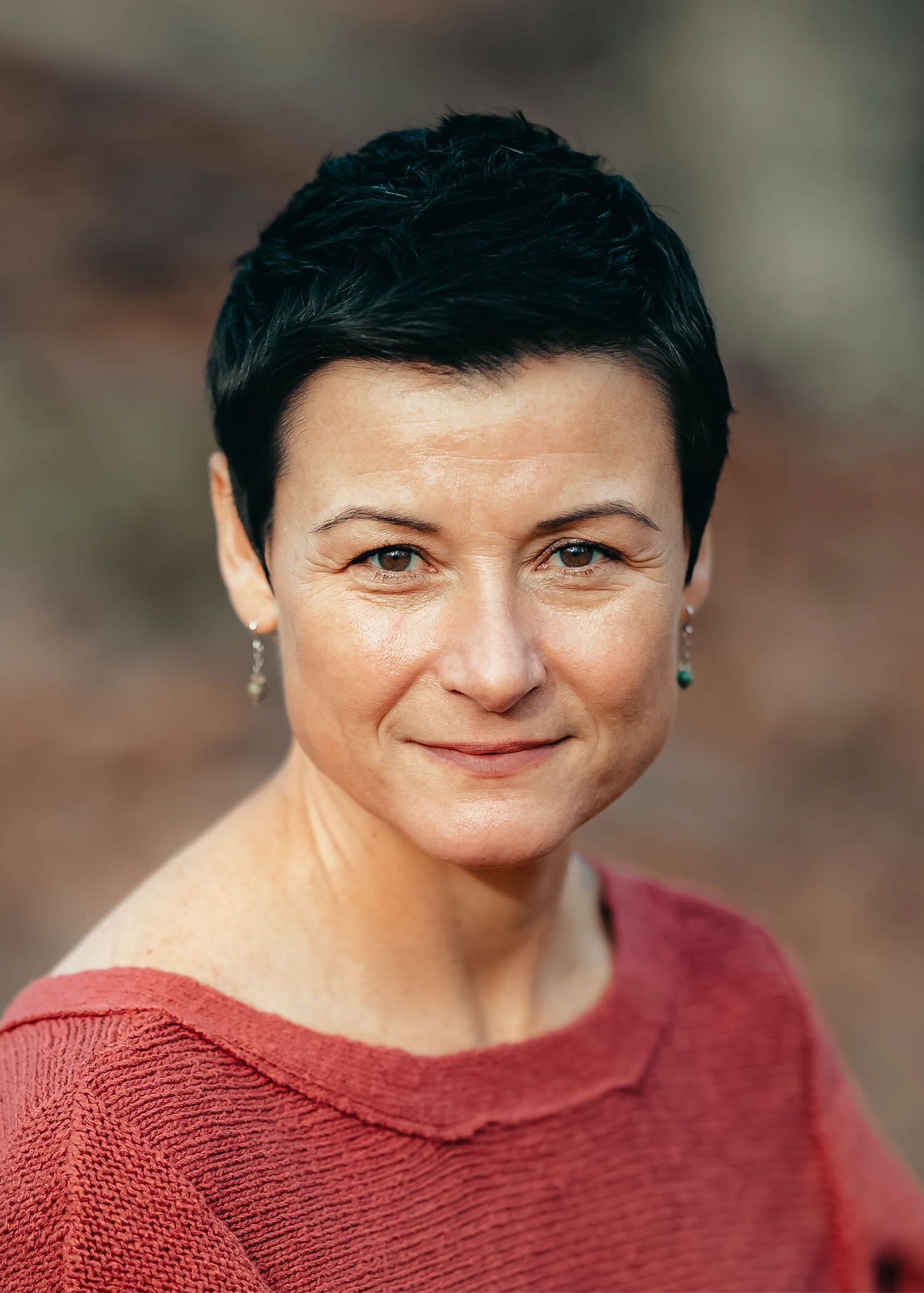
Sarah Elkins lives in southern West Virginia where she is rounding the final curve of a four-year term as a councilperson in the City of Lewisburg, population 3,700ish. She is also chair of the Parks Commission (Yes, you should be thinking Leslie Knope). Sarah and her husband Max run Hammer Cycles, a bicycle shop in White Sulphur Springs, WV. She and Max founded and coach the Greenbrier Valley Hellbenders Youth Mountain Bike Team and work tirelessly on trail advocacy and mountain bike initiatives throughout the region. Sarah’s son, Tad, is a high school freshman and loves hearing poems about his birth and progression through puberty. Oh, yeah, Sarah writes poetry. That’s what she loves to do most. Therefore, she fills her time with all the aforementioned stuff to remain at an appropriate level of disequilibrium from which the poetry springs.
Website: SarahElkins.com
Birthing
The summer before my son was born, I ate tomato sandwiches
with mayonnaise, salt and pepper.
The rain was so heavy in June, the fruit
swelled on the vines and their skins ripped.
I took big bites holding thick bread with two hands,
pink rainwater running down both forearms
to my elbows—everything reduced, then,
to hunger. At night, curled on my side
in the un-airconditioned dark
I dreamt of big cats’ razor tongues
dragging the length of my back,
saber teeth at my throat, not tearing
the skin but feeling for pulse,
their muscled hips coaxing me
into the sweaty delirium of my final weeks.
The cats returned every night until
twenty-six hours before I howled him into being,
I opened. All the rain of June, and July
leaving me for the hardwood floor
where I crouched on all fours looking
for flecks of vernix, tasting my wet fingers,
sniffing the sweet water for signs it was time.
The cats slunk away until now, eating
this tomato sandwich, my first in twelve years—
I recall I was a panther once.
From the Tall Grass
I floss at night after steak and butter.
My house: unguarded range, bison huffing,
ice-faced, hooves stamping an echo stutter.
I do nothing in this boundless nothing.
No thought, no synapse firing. Still hands still
stained—berry juice of an empty morning.
This room-less space, a translucent thin will
through which I, good sow, whiff my boy’s homing.
His trek complete, except for the recount—
bighorn sheep, bull moose, near miss, eagle plume.
I toss one sleek mink to the catamount.
The grass lies down; walls rise around my room.
Ursa fades. A house cat lurks in willow.
I sip gin, smooth the pelt of my pillows.
Mar 28, 2023
Mar 28, 2023
38 min
Can you lean into experience without always needing meaning, Slushies? The psalm is a Christian form similar to a song or poem where meaning is often elusive unless the reader is prepared to put in the work. Sometimes, though, things just are, and we certainly encounter that here in some very satisfying ways. We talk about the importance of the pause or caesura in poetry, proofreading, and powerful image systems. We also just enjoy the experience of reading two gorgeously rendered poems full of both the specific and the mysterious.
Links to things we discuss that you may dig:
Poetry Foundation: Caesura definition
Flannery O’Connor’s The Violent Bear It Away
Robert Hayden’s Those Winter Sundays
This episode is brought to you by our sponsor Wilbur Records, who kindly introduced us to the artist is A.M.Mills whose song “Spaghetti with Loretta” now opens our show.
At the table: Marion Wrenn, Kathleen Volk Miller, Samantha Neugebauer, and Dagne Forrest
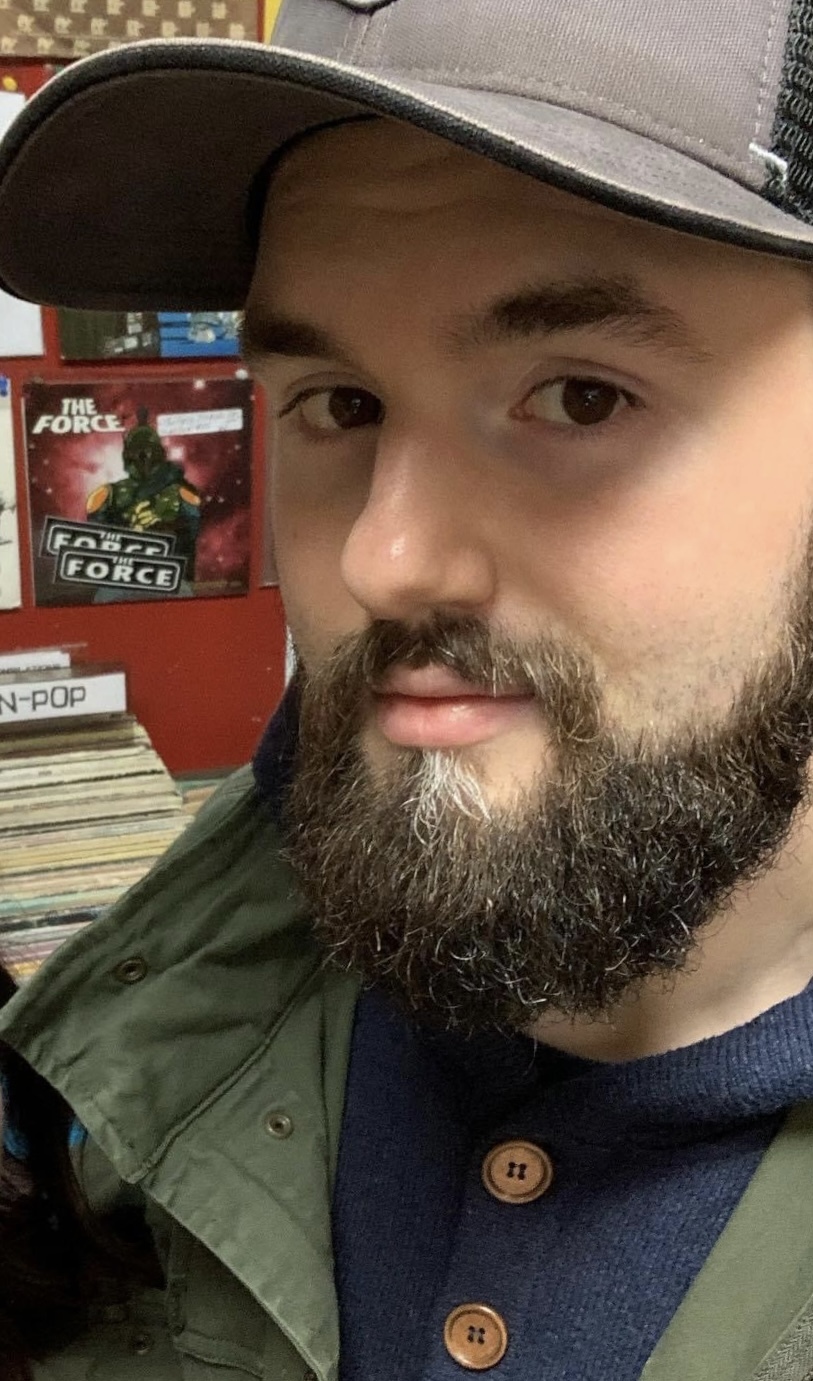
John T. Leonard is a writer, educator, and poetry editor for Twyckenham Notes and The Glacier. He holds an M.A. in English from Indiana University. His previous works have appeared in Chiron Review, December Magazine, North Dakota Review, Ethel Zine, Louisiana Literature, Jelly Bucket, Mud Season Review, Nimrod International Journal, The Indianapolis Review, Genre: Urban Arts, and Trailer Park Quarterly among others. He lives in Elkhart, Indiana with his wife, three cats, and two dogs.
Socials: Twitter @jotyleon and @TwyckenhamNotes
Psalm
Prone to wonder. Lord, I feel it.
Nomad, no man, no son, father, sun.
I am bright, rusted, and wretched.
You turned the doorknob right,
hot shower and cold bathroom tile.
I was wrapped in that small, soaked rug.
A place that filled the garden of our souls,
superior and sewn, stones dancing across a lake.
Look how Christian a puddle of vomit can be.
You held me, let me breathe into your arm.
You forked my tongue and sewed a map to
North Dakota with that black medical lace.
For Hell’s sake, I am holy, holy, calm, and true.
Be escaped. Be fallen, black, and blue.
My call to evaporate, pulled upwards to
the real adventure. Wide awake now,
bruised vanity, summer of head colds
and bodies washed up on the pebbled shore.
If I took it back, my sunglassed future glance,
my walk of muses, my pacing lonely apartments,
spitting on each and every brick. If I took it back,
but not what I’ve suddenly become: a contrail
of promises, sci-fi crimes, Saturn in the traffic.
I’m chasing altars to the daylight of you.
Feels like I feel it, prone to rip the husk of your lips.
Still, the rusted son of red starlight, gospel music
touching lovers in the limo behind the hearse.
I am lime, let moonlight citrus me further.
Then Sunday will come and sweep it all away,
back into the rose quartz river of a psalm.
Fledgling
Waking up to the white bone of dawn;
memory of light, half-life of darkness,
a daily prophecy of frozen floorboards.
This cold, fading silence of Sunday morning,
falling like the ash of a thirty-year volcanic winter.
The way all of our merit would vanish, if we gave up
a moment of the day to plunge back into our dreams.
Light, now imagined as radiant cloud or burning crown.
The slow trudge outside, curse and prayer of woodpile.
Eastern red cedar still asleep: erasure of termites,
black snake of phone line limp with snow, sick fledgling
whose eyes didn’t close, not even once throughout the night;
who waited out the insectile buzz of street lamps, waited
for one final glimpse of flame. Moments now, moments,
and the flick of my lighter will catch its eye. The soft glow
of cherry, the ritual of my ignorance, the weeks of feeling
watched—so full of myself that I thought it must be God.
By dusk, one of us dead and the other, none the wiser.
Mar 20, 2023
Mar 20, 2023
45 min
There’s a lot packed into this episode, Slushies, including sibilance and balancing gravity with a light touch. Differing perspectives and the resonance of history, both real and mythical, cascade through a trio of poems by Danielle Roberts. Jason worries that his erudition has collapsed momentarily, Kathy loves the rush of wanting to immediately re-read a poem, and Samantha reminds us of an Anne Carson line: “Aristotle says that metaphor causes the mind to experience itself in the act of making a mistake.” Oh, and Marion brings to life the idea of hearing a baby’s cries in the ceiling when she recounts living in the apartment below a family with newborn triplets!
Links to things we discuss that you may dig:
Jeanann Verlee’s Helen Considers Leaving Troy
George Eliot’s Middlemarch
Anne Carson’s Essay on What I Think About Most
Elizabeth Bishop’s Collected Letters
Jason Schneiderman’s How the Sonnet Turns: From a Fold to a Helix, APR Volume 49, Issue 3
British Antarctic Survey: Ice cores and climate change
Smartless Podcast (Jason Bateman, Sean Hayes, Will Arnett)
This episode is brought to you by our sponsor Wilbur Records, who kindly introduced us to the artist is A.M.Mills whose song “Spaghetti with Loretta” now opens our show.
At the table: Kathleen Volk Miller, Marion Wrenn, Samantha Neugebauer, and Jason Schneiderman

Danielle Roberts is a queer poet from California. Her work has appeared or is forthcoming in Atlanta Review, DMQ Review, Okay Donkey, Prairie Schooner, Reed Magazine & others. When not writing poetry, she can be found drinking too much tea & pestering the nearest cat. Read more of her at sonnetscribbler.com.
Socials: Instagram: @sonnetscribbler
How can I leave this behind?
after Jeanann Verlee’s Helen Considers Leaving Troy
after a floral gin cocktail
Do I want to live and die my whole life here—
buried in county lines—or is it time
to stretch the map? There’s more
to plan than simply running away.
while holding my niece
Picking up the baby doesn’t help:
I smell her hair & wonder if she thinks
of me when I’m out of sight. Will she know?
Her eyes stare into the distance
along with mine. Maybe she travels
in her dreams. Maybe she lives
elsewhere.
while eating dinner
Gorging myself on routine, I chew bread & think
about the bagels in New York. I live these sour-
dough rituals—oven baked in centuries
of families. A young tradition bound by water
on all sides. They say it’s in the water.
Doubtful, I gnaw on my nails.
when people ask if I’ll have kids
Come on, Karen—I just blew up
my life & you’re asking if I’m ready
to be a sacred vessel? The only answer
I can give is to flee far away
from anyone who had dreams
for me or thought I could be
marriage material. Go where
all folks care about is which street
I live above in the gridlocked graph
or whether I’m walking fast enough. Blend.
It would be easier than questions of barreness.
when my ex wants to get back together
Absolutely not.
from the freeway exit
Behind the wheel of my car, I carve trenches
again—circle and retrace my path—map
the small universe on foot, pace my cage.
Maybe I take to the night sky
or simply head east until I hit water.
Gorges and grooves heal, scarred
cutting board life. Do I keep driving?
Where do I even go from here?
These dreams that weren’t mine
festering in my wake. What city takes
such hazardous rot? How do I leave
my family behind? How
do I tell them I’m already gone?
Extracting memories[1]
Speak to me in layered tongues of bitten snow, slow
molars carved with frost collected in the valleys between your teeth. The scientist bores a core—
plucks the long memory from each glacier—this meter holds your first bicycle ride, this
a bridal veil of volcanic ash from Pompeii, six cylinders of centuries trespass
the sterile air—blink at the unforgiving sun. From the dentist chair, you look
up at the light and this persistent body shrinks—cracked with age
and use. Our indestructible jaws crumble with heat, losing
enameled eons to inaction, forgetting to stitch our gums
with floss. It’s far too late to mend our habits
now: best to preserve what we can. Each
line, a thought pulled out of context—
precious archive of time before tales.
We transcribe the answers to
our final test without
any chance of
knowing the
questions.
Reassurance
1—
My cat startles & I tell her nothing
bad is happening, but
we both know that’s a lie
on a large enough scale.
She hears the neighbors’ doors
slam, the child in the ceiling crying
like an injured mouse. She knows footfalls
on the landing lead to the uninvited
lead to us coaxing her to accept
strangers in her home. She knows
the rush of sirens down Oak or shouts
from the narrow park must mean something
in the same way we all know
that one thing always leads
to another.
She turns a pale eye towards me as if to say
just because it’s not happening to me
doesn’t mean it’s not happening.
2—
As we wade into the cold mountain
lake, my sister promises me
nothing’s going to touch your feet—maybe
some grass or a fish, but I’ve never seen anything bad
here. She shifts the baby to her other hip & walks
deeper. Her husband rows away from the widening rings
of sunscreen filming the top of the swampy water, oil slick
of caution. I know she loves me.
Later, I scramble onto the inflatable raft & hold
the baby & my breath. My sister stays rooted
in the water—extracting the implanted
leeches from between my toes—doesn’t
glance down at her own feet. Not even once.
Her husband saw the signposts on the shore & told
no one. He thought they didn’t apply anymore:
he’s never noticed anything in the waters.
3—
My boss sends a message before an important meeting
to ask if I can still lead in light of the news. I reassure him
yes, I’m in California—I’m not affected for now.
In the crowded room,
the men make small talk,
but have nothing to say.
Feb 12, 2023
Feb 12, 2023
54 min
Slushies, get ready for some trailblazing poems in the form of mathematical proofs, theorems, and other types of mathematical reasoning that level their gaze at heartbreak. One poem even embeds a second poem as a footnote. Alex reminds us all of the hermit crab essay/poem format, prompting Sam to recall Maggie Nelson’s Bluets, in which the end of a powerful love is likened to the experience of shedding yet still living with an abandoned skin or shell. Come along for a ride with some poetic work that’s furious and logical in equal measure!
Links to things we discuss that you may dig:
Joe Wenderoth’s Letters to Wendy’s
Samantha Hunt’s The Seas
Maggie Nelson’s Bluets
This episode is brought to you by our sponsor Wilbur Records, who kindly introduced us to the artist is A.M.Mills whose song “Spaghetti with Loretta” now opens our show.
At the table: Kathleen Volk Miller, Marion Wrenn, Samantha Neugebauer, Alex J Tunney, and Dagne Forrest

Rei Alta is a black writer, disciple of science, artist, and proud supernerd. She resides in Massachusetts where she was born and raised. Rei spends most of her time supporting brilliant young people from historically marginalized communities in their exploration of science and engineering.
Socials: Instagram: @reialtaspeak
Inflection Point 1b
Theorem 1.1. The pain, longing, and ambivalence I feel related to this particular past lover (hereafter “him”, “he” or “you”) is not unhealthy.
Proof: By definition, “Time heals all wounds.” Suppose for all purposes, 11 years is considered to be ‘Time’. It is true that 11 years have passed, however I am not healed. Thus, this thing I feel is not really a wound.
Theorem 1.2. There exists a value in this lover that I use to cope with a deficiency in my current state of being.
Proof: By Theorem 1.1, this lover does not represent some larger, unresolved issue. It is true, however, that I still have been unable to let him go. Therefore, he must be notable for a different reason. By supposition, that different reason is that he and I had an unrivaled connection. I.e. While there is no such thing as soulmates, our cognitive compatibility was substantially higher than that of my previously observed matches. Hence, I feel an intensity through recollecting him such that most other things pale in comparison. Therefore, I remember him in order to feel something when I don’t.
Theorem 2.1. There exists an absolute truth about why I loved him and why I haven't been able to let go.
Proof: By definition, “All things happen for a reason.” Since it is true that loving him and being unable to let go has happened, there must be a reason that caused it. This reason must be the truth. Suppose not; i.e., suppose this reason was not the truth. Then it would not have possessed the power necessary to cause such a consequential thing to happen. Such a consequential thing did happen. Thus, there is an attributable reason that is the truth.
Theorem 2.2. I must understand why I have not been able to let go—in order to let go.
Proof: By my own definition, I am a finder of truth. By Theorem 2.1, there is a truth to be found. If there is a truth I have not yet found, then I must find it in order to exist since finding truth defines me. Thus, I have no path forward but to find the truth.
____________________________________________________________________________
CAVEAT: Due to the following factors, the validity of the proofs outlined above is questionable:
- Invalid underlying assumptions
- Faulty reasoning
- Insufficient information
As a result, extrapolation based on the conclusions laid out in the preceding section is not advised.
Read the rest of this entry »
Jan 30, 2023
Jan 30, 2023
47 min
If your story had a sound, Slushies. What would it be? A rush, a zuzz, a sizzle? David Landon’s “Bach, Onomatopoeia, and the Wreck” triggers a discussion of stories and sounds, and poems that resist narrative closure. Shane Chergosky’s “Headwind” takes us down a different path. Erasures, Slushies. Ammi right? Listen to us puzzle over the way erasures “make it new” and simultaneously obliterate and conjure the from which they’re made. Special note: Jason reads the erasure twice. First as a robot, then as a human. We love both versions-- of the poem, and Jason. And if you are hungry for more: take this and this and this.
At the table: Marion Wrenn, Alex Tunney, Kathleen Volk Miller, Jason Schneiderman, Samantha Neugebauer, Larissa Morgano
This episode is brought to you by one of our sponsors, Wilbur Records, who kindly introduced us to the artist A.M.Mills, whose song “Spaghetti with Loretta” now opens our show.

David is never quite sure whether he is an actor who writes poetry or a poet who acts. And perhaps he can be forgiven his obsession with iambic pentameter: he has done a lifetime of Shakespeare, as an actor (New York, Nashville, and Alabama Festivals), director, and coach. His poetry—all iambic pentameter—has been published in Able Muse (Write Prize, winner), Georgia Review (Williams Prize, featured finalist), Southwest Review (Marr Prize, runner-up), the Dark House, Think Journal, and elsewhere. Officially, he is the Bishop Frank A. Juhan Professor of Theatre Emeritus at Sewanee, the University of the South.
Bach, Onomatopoeia, and the Wreck
For all we knew, it was a random chunk
of interstellar rock, the rear-end crash
that brought us to a halt. Dinner was out,
of course, and the Bach too, I realized,
feeling it in my neck, and standing there
in the rain, examining my totaled car,
the guilty driver soaked, in tears. The cops
were nice enough, did what they had to do
efficiently. The wrecker did show up,
eventually, and we began to cope.
And since it’s now collision story time,
the word I’m hearing in my head is ‘thud’.
There’s ‘clunk’, of course, or ‘jolt’, ‘wham-bang’, or ‘thwack’.
‘Thwack’ has that sudden, can’t-be-happening feel,
as in, “I was just sitting, reading Kant,
when suddenly, inside my head, I felt
this ‘thwack’, and everything went blank.” But no!
The word that truly bongs the knell is ‘thud’,
essence—onomatopoetically—
of impact, ‘thud’, from dice, to hand-grenade,
to asteroid. We need the stupid ‘d’
of ‘doo-doo’, ‘dodo’, ’dude’, or ‘dud’, or ‘dead’.
‘You’re-done-for-d’ is what we’re up against;
you never know when out of nowhere, ‘thud’!
But on the other hand, there’s Bach: the Bach
we missed, the works for cello solo. Bach:
initial ‘b’, a kind of plosive bump,
terminal ‘ch’, a bit of friction in
the throat, but in between the ‘b’ and ‘ch’,
the ‘ah’, release: sustained and open, ‘ah’.
Think of the bow colliding with the string,
a subtle thud, a scrape, and out floats Bach,
genial Bach-analia of dark
and light, a theory of the universe
as music: bang, and then the sarabande,
the minuet, the allemande, the gigue.

Shane Chergosky was born in Minnesota where he was raised on stuffed cabbage and heavy metal. His work has appeared in Pithead Chapel, HASH Journal, Juke Joint, and is forthcoming in Adirondack Review. He holds an MFA from George Mason University and lives in Washington, D.C.
Headwind
? When I think about the story she told me
about that I don’t even wanna hurt the guy. I don’t
know if I could meet that person and act normal.
I remember I did that when I was about 20,21.
I didn’t go into CVS with Xunaxi to
What a bastard I was . And
//
ith what courses I take.Luckily I can only take two (!!!). Maybe a lit course
and…an elective? It’d be SO cool to do screen-
writing. Finally would have a chance to write that
SciFi…I ordered “The Art of Syntax” after Phebe
brought it over. I honestly get so self-conscious talking
with her about sentence-level stuff. She’s so smart and
her recall is so good (regardless of what she says re: her
//
I want to sleep in a crappy hotel and make
jokes hold her after we kill a pint of ice cream.
something feels right about her, about the way I feel
around her. I want her attention. I want her to
pay attention to me. She does! but I don’t know it’s
different when you’re with what I have a
hard time with imagining her with her ex, though they’re
//
I feel like fragments could be a part of
my work/thesis. It’d be cool to take a finished
poem of mine, print copies, and do some Christian
Hawkey-type process with it/them. The 19th and 20th
days had that feel to them because I tore a bit
from the top of the page, forcing me to write around
the tear. Now, if I had a finished poem, and shot
it with a gun, or let an animal chew on I, or
let a human chew on it even, the parts that survive
//arrative time no time
feeling of the trout throat closing odd breathing
but accepting that I have limits I deserve to feel
OK, to take a break I’m OK I’m doing everything
//
I’m afraid of telling her how strong my feelings are
I think it wise to simply show her and not ask about
sex for a few more months.
She said we’re dating and that makes me feel
secure.
//
Canal
a cane smoothed
orchard
backlogged
beggar concrete
daisy a conquest
//
not together I guess I’m having a hard time NOT
imagining them together. How could he treat her
that way? I mean no relationship is a cakewalk
but like how could someone tell a woman they’ve
been with for over a year that they’d rather
keep driving and make it (home?) on time than
stop for a tampon, to let the woman you supposedly
love (did he even tell her?) that you’d rather her sit
in her own blood, in discomfort and shame than
do everything in your power to relieve her? to actually
act? to perform an act of humanity? of care?
concern
//
subcultural history. I feel like (and I’m probs
stating the obvious) thagt the niches of already niche
are erased by the dominant cultural narrative/
the narrative(s) that are hoisted up by capitalist/
supremacist ideals and/or organizations. I can’t
write organization without thinking about grant writing
//
I can, I’m doing a lot. Teaching is a lot. I’m
going to apply for the fellowship. It’s not that I
don’t want to teach, I just want time to
focus on my work. I keep feeling its really getting
somewhere. A chapbook at the least and a
publishable one too! I want it. This semester is
just wearing
//
Where only a portion of the whole survives. Then,
I could make the other parts appear elsewhere?
Maybe it’s too on the nose but I’ve been thinking
about the fragmented texts of the Anglo-Saxons
(and probs other traditions) in association
with incomplete narratives
//
raging satin page paginate vagina labia vulva
intestinal contested protest regress transgress
shake Shakespeare a knight made of feathers
stuffed w/ feathers feathers on the doorstep
rich lumber in heaps full pools of yellow
beer getting warm in the kitchen
the glow of the microwave the suran wrap
melting on the still-cold lasagna, the color
of waiting. Not even a color. Page page again
wait know confound botch rip slap chirp
girder serve elastic teeth cold
//
I’m so glad I’m not that way. Maybe I
am and don’t know it until it happens?
Maybe thinking about
Phebe’s ex reminds me
of that, that’s why it
makes me so disgusted
and maybe it’s good
that I’m disgusted
//
to do. But you live and learn. I
want to love again and make it right, or do it
effectively, the way that makes us both feel whole or
more whole/full than empty. I will get an A in
grant writing. I will succeed. I know I’ll get an
extension and be able to make the internship
//
I want to
make love to her real bad she d r ive s me crazy.
She’s sensual , and erotic, and really
It was a terrible, immature thing
//
Intelligent ran runaways kept barking on. A sub miss ion
hold putting entire cities into head
-shirt void a void you can buy a void that becomes
armor, a subculture, an agreed upon set of
val u es in t elligent lights through a crispy gauze
of hair swollen blue halo widening behind them
like a wedding band. Overblown evening leather
charms hanging on the door handle, on the bedpost.
Literally thieves war paint corpse paint
a mouth like a root system spreading, fragmenting
branching diverging at both ends a worry
squirrely ratchet odor smolder controller
recover withdraw sheath hearth bust bent
bruised lashed fixate lack lax creation Bonneville
cruiser a loose ruining
Dec 13, 2022
Dec 13, 2022
43 min
How much meaning do you need, Slushies? When language lingers, when images form a spiral, a murmuration, might a poem’s mood hold meaning close to its heart and simultaneously at bay? And, also, how do you pronounce ‘ichor’? All this and more in a rollicking conversation about poet Nick Visconti’s new work, “Burial” and “Unmake These Things.” And speaking of things, listen for Samantha on Anne Carson’s zen koan dollop of insight from Red Doc>: “To live past the end of your myth is a perilous thing.” Or for Kathy and Marion confessing their North Carolina ritual groping of the Dale Earnhardt statue in Kannapolis, NC. And finally: geese. Nick Visconti’s poem triggered a reverie-- that time when we accidentally stumbled into the annual Snow Geese migration in Eastern Pennsylvania.
At the table: Dagne Forrest, Kathleen Volk Miller, Alex Tunney, Samantha Neugebauer, Marion Wrenn.
This episode is brought to you by our sponsor Wilbur Records, who kindly introduced us to the artist is A.M.Mills whose song “Spaghetti with Loretta” now opens our show.
Nick Visconti is a writer living with an artist and a cat in Brooklyn. He plays softball on Sundays.
Burial
It is love,
not grief, which inters
the deceased
in a hill made of clay.
Sod embraces
crossed arms, legs, eyes shut
looking forever
at nothing
beneath our feet—a container
for men unmade,
no boat to speak of.
No oars
darkly dipped
in water as we pictured
it would be. Instead,
a single shred of light
piercing every lens
it catches. Instead,
a pathway none cross,
just follow through
and up
and up—the cusp of ending,
nothing at all like the end.
He isn’t in this yard when
his children roam. Still,
they dig,
they expect to find him:
braided leather, steel-wound aglets,
his black opal intact.
Unmake these things
The sand before me like water, fluid and holy
under the cratered crown nearly
half-awake, circling
as I draw the one way I know—stick
figures in a backdrop scenery, thick-
headed and content, wheeling
psalms of birds, wide-sloping M’s
grouped in permanent murmur. I don’t bother
with the sun’s face, bare in the upper
left corner of the page. I’ve made
a habit out of hoarding ornaments,
given them their own orbit like the russet
ichor dashed with cinnamon
I choke down every morning and afternoon.
The city’s puncture-prone underbite nips
the sky, consuming the bodies
above—thunderheads, billboards
notched, alive in the glow of that always-
diurnal square. There’s been talk lately of
irreversible chemistry, an acceptable stand-in
for cure among believers and experts
in and on the subject of Zoloft-sponsored
serotonin. A first weaning is possible.
Do not bother with a second.

Sep 22, 2022
Sep 22, 2022
35 min
We have a special treat, Slushies!! In today's episode, you’ll get a duet from Nancy T and Rachael Philipps. Starting with the accents of Long Island, T’s poem makes Alex think of Nassau and Suffolk County while Marion recalls Billy Joel's music. The language also leaves the crew thinking about Tracey J Smith’s, “Solstice.” The tables turn when the crew reads, Philipp’s “After you left us,” going from jargon about the sounds of the world to the description of human remains. With cremation on the rise, the crew ponders the process being described in this not-so-sentimental poem.
Alex mentioned that he is able to do a full SNL Skit, which one do you think it is?
This episode is brought to you by one of our sponsors, Wilbur Records, who kindly introduced us to the artist A.M.Mills, whose song “Spaghetti with Loretta” now opens our show.
Nancy T is a high school teacher, poet, artist from NY, currently living down south.
Rachael Philipps is a poet, journalist, and a properly misanthropic Welsh woman with an
unhealthy dependency on caffeine and marmalade. She is constantly chastened by her iPhone’s audio settings for playing LCD Soundsystem too loud whilst out on her regular jogs around the mean streets of Westchester. Rachael’s poem “Perfect Little Houseguests” was published by Swwim Every Day in August 2022, she was awarded a Bethany Arts Poetry Residency in 2021 and was the recipient of an AWP Writer to Writer mentorship for poetry in 2020. Her journalism spans broadcasting for the BBC plus writing and editorial work for print titles including Time Out London, The New York Times and Food and Wine magazine. She is currently at work on her first chapbook.
Nancy T
Long Island Sound
The chop on the sound
nearly drowns the clubbing
you deal bluefish on deck.
Red slicks beneath one bold bastard
flipping you silvered
curses, straining for water
or flesh, some end. Then wind
surprises, cracks you a backhand,
a cleat bruise begins darkening your rose tattoo.
They suspend at depth, hit
and hit until sated and free,
or iced under gray. The bow
begs a turning back
we know you’ll refuse. Tired, still
for a time not long, never long,
you swear when the inboard coughs
taunts and seizes,
and the rain, the rain dares spit
on your back in the hold
under gulls striking near,
the siren water sounds
gone unlovely, steady long gone,
just the sound of metal striking struck
metal, like metal resisting your forge hard and hot and bent and
The gulls cry over diesel on waves
sheening a sad iridescence, like soap on tongue.
Rachael Philipps
After you left us
After you left us, I got the call
Her cremains are ready, she said.
The what? I said
The cremains...cremated remains.
She explained, testily. Like... duh.
Oh, I say Her ashes.
What I wanted to say –
She, should
never be called cremains.
Of course I angry-Googled it –
industry term, euphemism,
first found in a newspaper obituary in 1947.
Discovered that her body,
once incinerated, was swept from
the furnace with a metal broom
and looked nothing like ashes (or cremains)
but like sand and bleached sticks.
A desiccated high-tide at the beach.
I found myself admiring our stubborn
big bones which apparently
always refuse to yield to 1800 degrees.
Yet even they must
submit to process,
get pulverized
in a Cremulator
to a uniform grind
to fit the urn.
to make the gone,
and their place inside us,
take up the least space possible.
|
Nancy T
|
Rachel Phillipps
|


Aug 26, 2022
Aug 26, 2022
44 min
It’s okay to be somber, Slushies! Don't let the poetic gestures confuse you as the rhythm and pacing contribute to a starburst of flash fiction by Maria McLeod. The obligation to help the writer leaves the crew thinking, as Kathy recalls Dubus’s “A Fathers Story” and Marion thinking of “The Defeated” on Netflix. “The Eternal Fall Backwards” will have you captured in the stream of the writer's thoughts and deeply invested in remaining there.
What piece of media did you recall while reading “The Eternal Fall Backwards”?
This episode is brought to you by one of our sponsors, Wilbur Records, who kindly introduced us to the artist A.M.Mills, whose song “Spaghetti with Loretta” now opens our show.
Maria McLeod writes poetry and prose. Honors include the Indiana Review Poetry Prize, the Robert J. DeMott Short Prose Prize, and three Pushcart Prize nominations. She was named the 2020 WaterSedge Poetry Chapbook Contest winner, judged by Oregon State Poet Laureate Kim Stafford, for “Mother Want,” published in 2021. Her second poetry chapbook, "Skin. Hair. Bones.," will be published by Finishing Line Press in 2022. Her poetry and prose has appeared in leading literary journals such as Puerto Del Sol, The Brooklyn Rail, Critical Quarterly, Crab Orchard Review, Sonora Review and others. Originally from the Detroit area, she currently resides in Bellingham, Washington where she works as a professor of journalism for Western Washington University.
The Eternal Fall Backwards
I hold his head in my hands, pull it to my chest. O. O of his mouth. Eyes glazed. It's dark and he didn't mean to do it. Make out the words, hit and run, man run over. Wanted to kill him. Words of the mouth: pathetic, half human, why don't I die, why not dead. Words slide one after another, into each other, slur, collapse, run down, run out.
There are tears and, sorry, I'm so sorry, drinking, always too much drinking. How an evening progresses, regresses. There are his two bodies: one ferocious, to be feared, a man afire; the other, a boy's, a fetal position, a thumb to his lips. There are nights like this when I am the mother. When I cradle his head in my lap, smooth his hair and say, it’s okay, you're okay now.
I have gone to the jail tonight to pay them to release him, because, drunk, he tried to kill a man. Drunk and stoned or hallucinating, he had run over a man, but missed his body and only hit his leg and the man fell down in the night and someone thought they heard a deep, deep moan but all were sure they had seen him fall backward in that eternal fall backwards that happens in slow motion. And someone said the man's body flailed and twitched after the car drove too fast and right at the man who didn't have time to run but looked up to see the face of a driver already afraid of what he had done.
There are days when I am not the mother. There are days when I am small, when I am the girl, when his hands are too large and his arms too strong. Days when my death comes too soon and then not soon enough, when he drinks too much and finds me in his bathroom seeing myself in his mirror and he's angry; my face is too much in his house and he cannot stand it there and pushes me quick into the mirror and the mirror cracks and my face is cut. These are the days I am not in my body, and so I walk and walk away and down the street afloat above myself, waiting for him to come. But first, he must hit me so it's my voice calling us back from the street, my screaming that draws us from the dark, saying look, look what you have done.
Night again. I bathe him and he is crying into the bath. On this night, he has pushed his best friend through a storefront and has cut himself trying to save him, deciding, after the glass shattered, he didn't mean it. It is like this for him, the before and the after: the anger behind the headlights followed by the fear of the body fallen backwards. Collision of two moments: hit and run. He bleeds into the bath, and I worry that I will need to take him to the doctors and they will see that he has taken drugs and has been drinking. I fear they’ll send him away, or keep him for themselves, thinking I won’t know how to heal him.
I am good at giving the bath. I rub circles at the sides of his head. I know to scoop hands full of warm water over his shoulders so they run down his chest. When I do this, my mother appears in my head, angry and not allowing my brothers to bathe because they make a mess she is sick of cleaning up. Instead she drinks and sleeps on the couch with her own hair greasy and stuck to her head. My brothers would go to school stained, unwashed, and the others would hold their noses and laugh and point. So I would wait until my mother fell into the deep sleep she does not easily wake from and I would gather my two brothers into the bathroom and tell them to take their clothes off. And I would fill the tub with water and the oldest one would refuse to take off his underwear because he didn't want me to see him. And I would say to get in anyway and I won't look at you. And this time he would do what I said.
I know his sickness. I know that what is left looks like him, but is not him. When I bathe him, he stops my hand from scooping the water and pulls me to him. He sees that I have been crying, too. He says that he did this. And I say yes, but that moment is past and now we are in another. He is crying the tears that come after the screaming and the hitting, tears that ask forgive me. I am closing my eyes and whispering that I have a room where a bed waits for him, where the walls give way and the light is a soft, cloudy white. I am circling him with my arms and he is crying into my belly. I am taking him, guiding him down the cold hallway into the warmth of the room where I cover him and keep watch, waiting for what is yet to come.


Aug 8, 2022
Aug 8, 2022
53 min
Join us as we consider a pack of poems by Pier Wright, and the complexities of pacing, prosody, and narrative poems with strange and powerful images: memory, tenderness, a “magnificent young moose,” & the magic of being caught in the act. Kathleen “Gratitude” Volk Miller, champion explicator and advocate for gratitude and neuroplasticity, analyzes the “small pointy hats of hope” as lovers entwine. Jason “Gorgeous Vectors” Schneiderman loves sticky collisions. Gabby and Alex and the crew ponder happy endings and surprises that feel like “Objective correlatives,” slushies. Spoiler: Marion “Sunshine” Wrenn makes an appearance from future past, or future perfect, or…something like that. It all makes a great story.
Slushies, what is your “embarrassing at the moment but will be funny later” story?
This episode is brought to you by one of our sponsors, Wilbur Records, who kindly introduced us to the artist A.M.Mills, whose song “Spaghetti with Loretta” now opens our show.
Pier Wright attended Kalamazoo College where he was influenced by the poetry of Con Hilberry and later by that of Diane Seuss. The first poetry reading he ever attended, and has never forgotten, was Robert Bly reading from Silence In The Snowy Fields. He received a Post-Baccalaureate & Masters degree from The Art Institute of Chicago. As a student he discovered Fairfield Porter, Monet’s large Water Lilly paintings at at Musée de l'Orangerie, Terry Winters, Mary Heilmann, Philip Guston’s late paintings, Giotto, Noguchi, etc.. Influences include Prayer Wheels, Marie Howe, Chris Martin, Peter Matthiessen, Stephen Dunn, John Cage, Ornette Coleman, Joni Mitchell, Phyllida Barlow, the ceramic work of Toshiko Takaezu, and, most recently, the writings of C.D. Wright. While living as a hermit for several years at the end of a peninsula in N Michigan he began working with Michael Delp. He has been the director of Wright Gallery since 2002 and is recently married.
Socials: Instagram is pierdwright, Facebook is Pier Wright, and website is pierwright.net (paintings)

Driveway Poem
we arrived early at the house by the subshop
after the bar closed
it was cold and being new at love
the only way we thought to keep warm
was by undressing completely, with great urgency
in the front seat of the Ford
then my foot got stuck in the horn
just as our friends began arriving
we couldn’t have left even if we’d wanted to
with all the cars having parked behind us
so we went to the party anyway
me with my shoes untied
you unfolding yourself from the car like a magnificent young moose
the night sky on one side of you and the stars over there
the way you had of entering a room back then
as though by just walking the muddy path to the stoop
a lotus popped out
Gratitude
what was once impotent in me
remains in this fiery house
on a small lot, crap lawn
every roughed grief
the small pointy hats of hope
red hibiscus bushes wilting in a row
the heat slicked fur of a sleeping hound
a house made not of things
but the relationship between things
such as the desire two bodies have
when flying blindly toward each other
at incredible speed
so, when I ask if I can make you breakfast
what I mean is, I am thankful you are finally here
The Hibiscus, Key West
we shared thin, raw, slices of tuna,
conch salad, cracked stone crab claws,
drank dark rum, tripped over the noisy chickens
on our way to your room.
drank more rum from plastic cups,
then a table broke, the matching chair in pieces,
waltzing together across worn linoleum
like aging Tantric porn stars.
waking to Cuban coffee, I remember eggs,
while waiting for a bus to Miami
you wrote your number on a napkin.
I tried calling several times,
a memory persistent as the fly banging
on this kitchen door screen.
Mother’s Day
what a day in the garden
pulling out the knotweed
the clover and spurge
forgiving you for leaving so soon
the way they cut your head open
I recall a dream
I find you in a dumpster it’s hot
your bones are missing
and you can’t get out
just now before dark
beside the thistle and burdock
your cheeks wet I ask if you are hungry
I chop potatoes eggs olives
how tender the early dandelion greens
are tossed with sea salt
bitter with lemon
drizzled with the good oil
I keep for company

Jul 18, 2022
Jul 18, 2022
55 min
Slushies, what are some ways a writer may gain your trust? Kathy lifts a brow at poems including questions. Marion looks side ways at pop-cultural references. (Check out this favorite of ours from issues past.) But these poems may make them think otherwise. In “Diving For Pearls” the imagery pulls us into the world of Bedouin and sea-faring cultural economy. Or how “Tidying up with Marie Kondo” may trivialize the idea of the context of curiosity.
Speaking of sparking your joy— or not— what was an item that you loved but had to get rid of?
This episode is brought to you by one of our sponsors, Wilbur Records, who kindly introduced us to the artist is A.M.Mills whose song “Spaghetti with Loretta” now opens our show.
Rasha Alduwaisan is an oral historian from Kuwait. Her poetry has appeared or is forthcoming in The Cincinnati Review, Michigan Quarterly Review, Willow Springs and The Common. She earned an MA in Middle Eastern Studies from Harvard University.

Diving for Pearls
My body is a sack of bones,
feet bound, heavy with stone,
I plunge and sand shatters
without a sound, tongue-
tied, this sea is breathless,
rope & leather & lead,
I grasp what I can see,
rough shells, round shells,
hollow shells,
I mouth your name
and something stirs –
I pry myself open to find it.
Tidying Up with Marie Kondo
Marie, I drove to the landfill yesterday to find my wedding dress the one
I couldn’t bear to give to anyone else I know I shouldn’t have but I followed
the truck down the beach road and into the desert tried to plead at the gates
you know the way they do in the movies but security was so tight, Marie
so I watched from the car and it looked like a mound of bodies lace wrapped
around denim around plastic around mulch and there were so many toys,
Marie dolls without stuffing bikes without wheels so many fridges
torn at the hinge and the truck I followed could have been any truck
my dress any dress so I left drove deeper into the desert until all I could
see were seagulls dipping in and out of the heap nothing on their backs
but feathers and they looked so happy, Marie they really did
Agarwood
I dab oud on my wrists, my neck,
the gap between my breasts,
the way the Agar pours sap into its
wounds, the tender scent filling the room.
In Cambodia, they strip down trees
to find it, the infected bark, the salve.
My throat is dry from shouting, this time
about you smoking inside the house,
the stove I left on all night,
the text we cannot translate.
I want you to kiss me, but all I can do
is tell you I would be better off without you.
Tell me, how long does a bruised tongue
take to heal? How sweet does it taste?
Jun 7, 2022
Jun 7, 2022
48 min
How do you pronounce “San Gorgonio,” Slushies? How do you say “Schuylkill?” We talk regional accents, local knowledge, and artistic craft-- from the risks of the pathetic fallacy to the unknowability of metaphor, the art of ambiguity, and, of course, the golden shovel. Join us for an episode devoted to poems by Marko Capoferri where we discuss poetic craft, resonant symbols, and the peculiar power of telephone poles.
What can’t you pronounce where you live?
Links to things we discuss that you may dig:
Eula Biss’s “Time and Distance Overcome”
Jennifer L. Knox’s “Irwin Allen Vs. The Lion Tamer”
At the table: Katheleen Volk Miller, Marion Wrenn, Jason Schneiderman, Samantha Neugebauer, Larissa Morgano & Kate Wagner
This episode is brought to you by one of our sponsors, Wilbur Records, who kindly introduced us to the artist is A.M.Mills whose song “Spaghetti with Loretta” now opens our show.
Marko Capoferri has lived and worked in eight US states, including Montana, where he currently resides. He is an incoming MFA candidate at the University of Montana in Missoula. He is desperately seeking fellow Italian-Americans in Montana for good pasta and raised voices.
Instagram: Instagram.com/markocapoferri
San Gorgonio
White paper coffee cups collect in drifts
by the freeway exit ramp—the hearts of ghosts
once held tight then tossed out the window
of a car speeding across the desert at four a.m.
trying to stay awake to see, when the light
came back, what the battered face of the land
could tell us about ourselves: how the mountains
were stark and risen; how we were sunk dumb
in between, a scathing plain of wind turbines
resonating unearthly as Amelia Earhart's flooded engines
chugging their final gasp on the ocean floor;
how the sea was here once and swallowed heights,
long since yawned and pulled away paving
this desert with a tired yellow dirt now blown
through our teeth, through our beating pistons,
and a few black rounded stones as souvenirs
from lost time; how thistle-studded towns
were hardly refuge; how the many stones
we had gathered were bright and jagged,
too young by design to tell any real story;
how lust and lost became an exchange in glances
through a motel’s cracked facade; how these roads
kept on dressing down like lightning on a postcard
running fingers in the hot mouth of experience.
Self-portrait with Elegy
Just like we were on the Great Plains
in 1949, my father and I would gather
summer nights with neighbors
lining our country road to watch
constellations disbanding. Whether tragedy
or a tragic lack of imagination, it’s hard
to say—he and I simply could not see
any threads or their severing. Then,
as now, telephone wires also lined the road
linking the night one lighted island
at a time, though the wires are now dead
gestures, props to a faded empire
of distant voices made close but never
close enough to turn that light
into warmth. What’s left—sinking
into my own humidity, my own
expanse of darkness, and he
to his own. As you read this
it is surely a summer night some place
the land extends forever
until it gives up where the visible
begins to visibly waver, either
from the heat or from the failure
of the possibilities of sight.

May 20, 2022
May 20, 2022
45 min
Hello Slushies. Do you see the string? Past the blooming peonies and fungus gnats? Follow us into the labyrinth of our minds as we discuss the work of Eric Stiefel. You may need to brush up on your Greek mythology and Italian literature as a guide. A discussion about various versions of ourselves turns into discussion of an app that animates photographs of faces and National Mason Jar Day (November 30th). And, maybe, the only way out of the labyrinth of the mind is to open your mouth only to forget what you were going to say.
If there was a national day to celebrate you, what would you want people to do that day?
This episode is brought to you by one of our sponsors, Wilbur Records, who kindly introduced us to the artist A.M.Mills, whose song “Spaghetti with Loretta” now opens our show.
Eric Stiefel is a poet and critic living in Athens, Ohio with his dog, Violet. He teaches at Ohio University, where he is also pursuing a PhD. His recent work has appeared or is forthcoming in Apple Valley Review, Prism Review, The Literary Review, Tupelo Quarterly, Frontier Poetry, and elsewhere.


A claw of thread’s all it takes to follow one thought to the next—
when West killed himself I didn’t say his name out loud for months,
though most days I still lean forward and pull my head back as if some spectral hand pulls my chin taut and points my gaze to the life
he abandoned inside this house of chaos we call everyday or otherwise inscrutable, my shoulders trembling like stained glass, the same way,
I imagine, Theseus trembled as his father threw himself to the rocks, not long after he left Ariadne sleeping on a beach made of coral and grit,
the mind displaced while the body stays behind, the breath clipped short and calcified, strung up in the overgrown garden Dante held back for suicides,
while, in some version of the myth, Ariadne became a god, goddess of serpents and twine and everything tangled, winged beasts hovering on the fringe
of knowing one way or the other, gloating on the worn-out roots of the trees we’ll be burdened to, until I’m sitting on the floor in front of a coffee table
pleading first with myself and then everything else, this skeleton of history and an infinity of arrangements of the stars for an answer of some kind—
at this point, I’d take anything that masquerades as understanding like a barrel to my chest, something to cradle off into the murk and the shadows of the night.
Phantasmagoric
Each time I kill one of my old selves—or more often let him loose into the static—I stumble on his shade sometime later, often when the seasons have changed and the lilacs have withered so that they, too, no longer resemble their former selves—
He was there, right there, standing in front of the meat market, with a ring of brass keys in his hand, just watching
as the pedestrians idled by—
and I start to ask if I would recognize myself if seen
from any real distance, or would it all just blur, terribly,
so that there could be no gesture, no omen or ominous figure lurking in the corner of one’s eye, and what
would I do then, what jar would I keep the days in, and how would I order them or else unravel further into a blizzard of ideas, and then what sense could I make of this before suddenly drifting away?
If It’s True of Human Nature
Actually, I hate the flowers—
now that the birds have vanished, as the last clouds drain away and a thin light winnows down where a grove of bees used to flourish—
and if you spoke to me of cruelty, I’d think about primrose in winter, lying dormant in the dirt, holding itself frozen, while the leaves left on the surface lose themself to rot—
I’ve been bestial and cunning, the way
ㅤㅤㅤㅤㅤㅤa troop of foxes conspires to survive the snow,
as winter moths lay havoc on landscapes of white trees—
and if you spoke softly, I might learn to trust you, even fold as a feathered wing, knowing that you might hurt me
ㅤㅤㅤㅤㅤㅤand that that hurt might be a kind of devotion
that we couldn’t explain, as the roof dulls the raindrops above us into something bearable,
ㅤㅤㅤㅤㅤㅤas if we could know
the limits of what we could bear—

Apr 28, 2022
Apr 28, 2022
36 min
Slushies, are you ready to take a deep dive into some fiction? Listen to “Benefitting Positions,” at the link below, or read it here. Would you ever hire a professional hugger, or would you want to be one? Listen in as the group discusses the concept of professional snuggling and what the drive is behind good fiction. In this time of social distancing, the topic of touch has become more pignant than ever, and very much so in Jac Smith's piece.
Maybe you’ll be a different kind of touched when you listen to how proud the group is of Jonathan. Maybe you’ll feel even another kind of touched when you hear about Jason’s academic journey, followed by Larissa's journey in the VCap Department, which has helped acclimate an ungodly 30,000 zoom users.
Send us your thoughts on the piece, and what you think of Jane’s anger, and we'll leave you Slushies with one last question. There isn’t a right or wrong, although we are side-eyeing you, do you read a book’s ending first? Or are you NORMAL and read the book from the beginning to end?
Listen to Benefitting Positions
This episode is brought to you by one of our sponsors, Wilbur Records, who kindly introduced us to the artist A.M.Mills, whose song “Spaghetti with Loretta” now opens our show.
Jac Smith is a MFA graduate from the University of Notre Dame and a recipient of the Studios of Key West Fellowship. She is currently seeking representation for her novel, The Loose, which explores grief as a form of addiction and is set in the Florida Keys. She lives in the mountains of Southern California with her wife. Her work can be found at Hypertrophic Literary and Santa Ana River Review.

Feb 21, 2022
Feb 21, 2022
47 min
We’re thrilled to consider new poems and flash fiction by Dr. Emily Kingery on this episode. Subtle and specific and utterly compelling, these poems make us ponder and pause and praise. We’re global as ever, Slushies: from Lititz, PA, to the KGB Bar, Gabby is somewhere in Powelton, it’s last year’s Ramadan (Ramadan Kareem!), Samantha hasn’t gotten married yet, and Kingery’s got us thinking about the trouble we got into in high school basements. Time warps and shapes shift! Listen in & enjoy.
This episode is brought to you by one of our sponsors, Wilbur Records, who kindly introduced us to the artist A.M.Mills, whose song “Spaghetti with Loretta” now opens our show.
At the table: Addison, Alex, Gabby, Jason, Kate, Kathy, Larissa, Marion, & Samantha
Emily Kingery is an English professor at a small university in Iowa and the author of Invasives (Finishing Line Press, forthcoming), a semi-finalist in the New Women’s Voices Series. Her work appears widely in journals, including Birdcoat Quarterly, Blood Orange Review, GASHER, The Madison Review, Midwest Review, New Ohio Review, Plainsongs, Raleigh Review, and Sidereal, among others. She has been a chapbook finalist at Harbor Editions and Thirty West Publishing House, as well as the recipient of honors and awards in both poetry and prose at Eastern Iowa Review, Iron Horse Literary Review, Midway Journal, Quarter After Eight, and Small Orange Journal. She serves on the Board of Directors at the Midwest Writing Center, a non-profit supporting writers in the Quad Cities community (mwcqc.org), and you can follow her on facebook: https://www.facebook.com/ekingery/

Dirtbag Wilderness
Our dirtbags, our dirtbags
were medicine men.
They spoke as oracles,
capped bottles, skated
razorblades across
the glass of pictures.
It’s just like shoveling snow,
laughed our dirtbags
as they unburied
their parents’ faces.
Like raking leaves,
want to try?
We watched their hands
swap bills, our eyes
the wrong kind of wild.
Our dirtbags laughed:
You can sit with us
while we finish.
This was intimacy:
our sitting; their finishing.
We laughed; we returned
frames to their shelves.
We bought shadows dark
and lip stains darker. Darker,
said our dirtbags, damp
on basement couches.
We envied in secret
the laughs of bright girls,
high as their hair
pinned in hard, slick curls.
They spun like acrobats
in the high school gym,
strobing in glitz
we were disallowed.
Bitches, spat our dirtbags,
skanks, whichever
words coaxed our laughter.
We swallowed them
like expectorant
and laughed in wet coughs
under canopies
of parking lot trees,
our arms crossed as though
coffined already.
We rolled in our dirtbags’ scent
like hunting dogs,
napped in stuffy rooms
as their hands, their hands
blessed guns, made backpacks
heavy with Ziploc holy.
It’s all good, laughed our dirtbags.
Our hips, our ponytails
swayed easy as leaves.
By summer, our dirtbags
wore sly, deep pockets,
weighed powders,
held capsules to the light
under a jeweler’s loupe.
The car windows glided,
phones lit up like lightning
bugs on the shoulders
of gravel roads. Such soft light,
light of vigils, light the yellow
of a forgiven bruise.
We rode to neighboring towns
of missing teeth and needles.
We cried in bathrooms
far from home. We were home
when we laughed, when we laughed
we laughed Everclear vomit.
But our dirtbags, our dirtbags
let us sit while they finished,
and their hands were warm
as stones pressing us to sleep.
Funeral for a Cat
When the cat was killed by a driver in a tragic hit-and-run, the dirt bike kid watched it happen. He screamed to gather us to her carcass: Pumpkin! He pedaled hard around the block. Pumpkin is dead!
I was afraid to tell Dad, at first. He went outside, shoveled Pumpkin into a grocery bag and dug a hole under a lilac bush. It was too late in the season for flowers, but he said they would bloom next year: a small truth sounding like kindness.
The kids begged him for a real funeral to say goodbye. He smiled a little, but not at them, and had us circle the grave and hold each other’s sweaty hands while he prayed. It was a test.
The dirt bike kid and the girls with yards of upside-down toys wept for the cat, loose with their sadness. The streetlights flickered on, and I was afraid of Dad again. I tried not to picture Pumpkin with a halo and wings, but I failed. I begged God to forgive me for it, then tried not to picture God as a cat shaking its head at my blasphemy, then prayed not to cry as the cats kept coming. I missed the amen, but I held out. I passed.
After the funeral, Dad said I was so grown-up, not weeping over a cat that didn’t belong to anyone. Not to the neighborhood, not even to God.
He prayed over hamsters in the years to follow, maybe a second cat. He prayed, and I grew into a tragic, feral thing.
Dec 13, 2021
Dec 13, 2021
53 min
Slushies, do you know your shades and types of blue? Do you know how to say blue in Russian? When we talk of St. Petersburg, are we talking about Russia? Or Florida? When we discuss Max Lasky’s poems we discuss what we call things and how we write things and what to call the things we write. (Discuss what ‘lyric’ means amongst yourselves.) “Come Here” takes the table to a scene in Maryland, once home to Jason and his long “O,” and is heavy in Hikmet. After reading “Prothalamion Poured from a Copper Cezve,” a love poem or a poem about love, we continue to praise Lasky’s juggling of images and figurative tight-rope walking.
This episode is brought to you by one of our sponsors, Wilbur Records, who kindly introduced us to the artist A.M.Mills, whose song “Spaghetti with Loretta” now opens our show.
At the table: Samantha Neugebauer, Alex J. Tunney, Kathleen Volk Miller, Jason Schneiderman, and Marion Wrenn
Max Lasky is a poet from New Jersey, currently living in Maryland with his fiancé where they are raising two plant children: a hardy mum named Thomas, and a basil plant named Bunting. Max is finishing up his final year in the MFA program at the University of Maryland and earned his B.A. from Ramapo College. His poems have been published by Trillium and Frontier Poetry, and he is the co-founder and editor of the literary magazine Leavings. He lives in and for the slush.

Come Here
We read Hikmet during what she called
a picnic, though we brought no wicker basket,
no plaid blanket, we rolled our jeans up
under our knees to wade across the river,
wide and knee high, the entire riverbed
bedded with sharp rocks covered in moss,
slick enough beneath our bare feet to make us
walk slow, half cautious, as a group of five men
flyfishing spoke Spanish, reeling in fish
too small to keep, taking swigs from warm
beer cans at the shore when they turned bored,
wanting us to leave. We stayed. As did the birds
pitching in a nearby thicket, almost inaudible
near the pop blaring from a portable speaker,
and a quiet drone flew high above the water.
Which is to say nature’s no more, at least
not there in Catonsville, Maryland, mid August,
where the Patapsco flowing toward the Chesapeake
could double as the sound of traffic passing
on a highway. All the plastic, all the tin cans
and wrappers littered across the rocks, the sand—
and yet hopeless is not something to be,
not for me or Hikmet or my love, who smirks
when I say a new Turkish word correctly.
My love, what are we to do? We lounged
on that ripped towel, smoking, when we should’ve
scoured the shoreline picking up trash. In masks
because of a pandemic, not one person
walking past on the trail looked us in the eye
or said hi, how are you? I lose a little hope…
I hope a little less and learn a new language,
or try. I learn how the river was commandeered
from Native American tribes by dead men, white men
who wanted to fuel their new plants and mills,
men who never imagined the future here,
hundreds of years later, or else just didn’t care,
not for us or the two women who walked
hand in hand, a leashed dog barking at their feet,
not the men who spoke Spanish and looked at me
confused when I asked what kind of fish is that?
I already knew it was a trout. I already knew
Hikmet was a communist who loved Marx and Lenin
and each of his three wives. Some of us strive
to better the world, some strive to better ourselves,
and the striving sometimes transcends joy.
Hikmet tried both not long ago when he wrote
“My strength is that I’m not alone in this big world.
The world and its people are no secret in my heart,
no mystery in my science. Calmly and openly,
I took my place in the great struggle.” I turned
to face a warm wind that laced my face with sand,
for the future’s everchanging, before it even happens…
Come here and change me, you whose tongue
on my tongue tastes of Turkish tobacco, and sun,
you who say the unsayable. Come here, aşkım,
lend me your hope, teach me how to grin again
after two decades of elegy and a broken language
rife with misogyny, and god. We took Nazım
to the water’s edge and read the translations
energetically, sweating, as the park closed
and the sun lowered, and for a few moments,
it seemed as if it was just us three and the river,
carving through the earth like the blood through
our veins, I learned a new word for landscape.
Prothalamion Poured from a Copper Cezve
Zuleyha read my fortune
in the dried coffee grinds
and tossed the saucer toward
the future, its arc across
left a chem trail renting
the sky, and I didn’t ask why,
I didn’t point it out or make
a scene about the vision
I’d been led to believe, as if
with a shovel in a lame novel,
as if my ears were a septic chute
that accepted every story,
no matter how far from true.
I didn’t mention my nomad past
or how my brain’s forced from place
to place in caravans, canal boats,
tents reeking of frankincense, pine,
or how that’s just another story
I’d been fed with a shovel.
I realized somewhat early on
in this early life that most people
are eager to live their lives
like stars beyond a projector,
a drive in, seemingly unaware
of the dark screen, and willing
to wrong anyone if it means
someone lifts the loose noose
from their own bowed necks—
they almost sprint down the steps.
I crawl up the steps to every
bad decision I’ve let happen,
happy to say I’ve changed,
took notes on each mistake
and if I ever turned back
I was sure to take a different path.
When I go home to the house
I grew up in, it’s not to stay.
As for the story, neither one of us
could say if it was imagined.
I wake some mornings to find
signs that don’t make sense,
suspicious of my own breath
and the sunlight through the slats,
because the world’s senseless
and nonsensical and tense.
A paranoiac and a high priestess
make for one hell of a couple,
our studio’s more like a circus,
we’re trapeze swingers swooping
from corner to corner, blowing
clown horns as we paint our faces
in a shattered mirror. Our strict
schedule requires us to weep
all day and dance at night,
saying I’m so fucking lucky
I met you. I’m so fucking lucky…
I rejoice, I digress, I paint two
red lines under each of our eyes
and step in line, waiting stone like.
I’m well aware it could be me
paranoid and schizophrenic
on the side of the street, paranoid
past repair, not knowing where
the self ends and society begins,
it could easily be me if not
for five or six good people.
As for the lover, I’m damn sure.
I put a poem around her finger
because I couldn’t afford a ring,
which means I’m always already
all in. I push the stack of chips
to the center of the table. I grin.

Nov 22, 2021
Nov 22, 2021
55 min
Slushies! We’re excited to release this episode featuring three poems by Hillary Adler: "Did You Google that or Shake a Magic 8 Ball?"; "We Must Be Animals"; and "Letter to Erika from a Bench on Christopher St." Recorded in the spring of 2020, our crew is well locked down but looking up, delighted to be reading poems together from afar. We’re down with “dirty words,” Slushies, and the ontology of the self, despite Marion’s broken thumb. It’s animality and the annoyingness of humans in “We Must Be Animals.” “Letter to Erika” brings the Big Gay Ice Cream back to us, and Jason talks about football while Marion tries to imitate Charles Bukowski, badly. Adler’s poems invite us into reverie, meditation, frank images, syntactical pleasures, and the challenge of sweetness.
This episode is brought to you by one of our sponsors, Wilbur Records, who kindly introduced us to the artist A.M.Mills, whose song “Spaghetti with Loretta” now opens our show.
At the Table: Jason Schneiderman, Kathleen Volk Miller, Addison Davis, & Samantha Neugebauer.
Hillary Adler is poet and journalist, and is currently the Director of Marketing for Topl, an impact technology company that enables digital and sustainable transformation across value chains and empowers the monetization of impact verified on the Topl Blockchain. She is from New York City, and holds an MFA from The New School. Her work has appeared in The Huffington Post, The Poetry Foundation, BuzzFeed, Rolling Stone and elsewhere. Her first completed book of poems, We Must Be Animals, has been in a drawer for over a year. Maybe one day it will see daylight. Until then, she can be found on Twitter and IG @HillaryAdler.

Oct 22, 2021
Oct 22, 2021
35 min
Featuring Sarah St. Vincent & Karolina Zapal
How many times can we reference the 90’s before you actually start believing that we can time travel? Are hairspray bangs enough (specifically Kirsten Dunst’s lack of them in On Becoming a God in Central Florida)? As the editorial table moves through space-time in our usual fashion, starting off in 1991, Sarah St. Vincent gives us a feeling of the WWE moments of intimacy which make, as Jason says with some Hulk Hogan gusto, YOUR BODY SING WITH PAIN! The spectacle of boxing and the compelling stillness of combat reminds Marion of Gabrielle Calvocoressi’s poetry book, “Apocalyptic Swing.” If you’re hearing the poem twice, that’s not ringing in your cauliflower ears! This episode, we take some cues from Pádraig Ó Tuama’s “Poetry Unbound” series by reading, discussing, and then reading again. Repetition, both in words and time loops, seems to be the theme here with Karolina Zapal sliding in more than a few ‘I love you’s into her poem. Calling all Grammar Slushies: What is the term for doubling up on words?
This episode is brought to you by one of our sponsors, Wilbur Records, who kindly introduced us to the artist is A.M.Mills whose song “Spaghetti with Loretta” now opens our show.
Sarah St. Vincent
Sarah St.Vincent is a human rights lawyer by day and poet by night (or very early morning). Her debut novel, Ways to Hide in Winter, was published in 2018, and she currently directs a clinic at Cornell University that provides computer security advice to domestic violence survivors. She's originally from that swingin'-est of swing states, Pennsylvania, and lives in Brooklyn.
Sarah’s Twitter handle is @Sarah_StVincent.

Karolina Zapal
Karolina Zapal is an itinerant poet, essayist, translator, and author of two books: Notes for Mid-Birth (Inside the Castle, 2019) and Polalka (Spuyten Duyvil, 2018). As an immigrant and activist writer, she writes frequently about her native Poland, languages, borders, and women’s rights. Her work has appeared in or is forthcoming from The Rumpus, Inverted Syntax, Tupelo Quarterly, The Seventh Wave, Mantis, Posit, and others. She has completed three artist residencies: Greywood Arts in Killeagh, Ireland; Brashnar Creative Project in Skopje, Macedonia; and Bridge Guard in Štúrovo, Slovakia. She works at the South Carolina Governor's School for the Arts & Humanities.
Website: karolinazapal.com
Facebook: karolina.zapal
Instagram: Karoissunshine
Twitter: KarolinaZapal

At the Table: Jason Schneiderman, Kathleen Volk Miller, Samantha Neugebauer, Marion Wrenn, & Alex Tunney
Sep 28, 2021
Sep 28, 2021
59 min
In anticipation of the Collingswood Book Festival, we thought it might be nice to have some of our senior editors and a couple of festival participants sit down for a proper chat about poetry and community, the anonymity of sending work out into the void and the anonymity of masks, and of course, bears and bathrobes.
Enjoy and let us know what you think! Has the pandemic made writing more universal or melted our minds so terribly that our relationship to literature has changed? Will readings stay virtual and/or can we find a happy relationship between Zoom and IRL?
This episode includes these special guests:
Cynthia Dewi Oka is the author of Fire Is Not a Country (2021) and Salvage (2017) from Northwestern University Press, and Nomad of Salt and Hard Water (2016) from Thread Makes Blanket Press. A recipient of the Tupelo Quarterly Poetry Prize and the Leeway Transformation Award, her writing has appeared in The Atlantic, POETRY, Academy of American Poets, The Rumpus, PANK, Guernica, ESPNW, and elsewhere. In collaboration with Philadelphia Contemporary, Friends of the Rail Park, and Asian Arts Initiative, her experimental poem, Future Revisions, was exhibited at the Rail Park billboard in Philadelphia from July to August 2021. She has taught creative writing at Bryn Mawr College and is a 2021-2022 Poet in Residence at the Amy Clampitt House in Lenox, MA. She is originally from Bali, Indonesia.
Rogan Kelly is the author of Demolition in the Tropics (Seven Kitchens Press, 2019). His work has appeared, or is forthcoming, in New Orleans Review, The Penn Review, Plume, RHINO, and elsewhere. He is the editor of The Night Heron Barks and Ran Off With the Star Bassoon.
We thought we’d include our bio’s here, since we never do:
Jason Schneiderman is the author of four books of poems, most recently Hold Me Tight (Red Hen 2020) and Primary Source (Red Hen 2016). He edited the anthology Queer: A Reader for Writers (Oxford UP 2016). His poems and essays have appeared in numerous journals and anthologies, including American Poetry Review, Best American Poetry, VQR, The Believer, and The Penguin Book of the Sonnet; he is a co-host of the podcast Painted Bride Quarterly Slush Pile. His awards include the Shestack Award and a Fulbright Fellowship. He is an Associate Professor of English at the Borough of Manhattan Community College and teaches in the MFA Program for Writers at Warren Wilson College.
Kathleen Volk Miller has written for LitHub, NYT Modern Love, O, the Oprah magazine, Salon, the NYTimes, Huffington Post, Washington Post, Family Circle, Philadelphia Magazine and other venues. “How We Want to Live,” an essay, was chosen as the penultimate piece in Oprah’s Book of Starting Over (Flat Iron Books, Hearst Publications, 2016). She is co-editor of the anthology, Humor: A Reader for Writers (Oxford University Press, 2014). She is co-editor of The Painted Bride Quarterly and co-host of PBQ’s podcast, Slush Pile. She has also published in literary magazines, such as Drunken Boat, Opium, and other venues. She holds “Healing through Writing” and “Writing and Neuroplasticity” workshops, and other memoir classes. She consults on literary magazine start up, working with college students, and getting published in literary magazines. She is a professor at Drexel University.
Marion Wrenn is Director of the Writing Program; Senior Lecturer of Writing and Literature and Creative Writing at NYU Abu Dhabi. Marion C. Wrenn is a media critic, cultural historian, and literary editor who writes essays and creative non-fiction. She earned her PhD from NYU’s Department of Media, Culture, and Communication and has received grants and awards from NYU, the AAUW, and the Rockefeller Archive Center. Recent work on satirical news and citizen audiences have appeared in Poetics. Her essays have appeared in American Poetry Review, South Loop Review, and elsewhere. She co-edits the literary journal Painted Bride Quarterly (pbqmag.org) and has taught writing at NYU, Parsons, and the Princeton Writing Program.
This episode is brought to you by one of our sponsors, Wilbur Records, who kindly introduced us to the artist A.M.Mills, whose song “Spaghetti with Loretta” now opens our show.
Jun 30, 2021
Jun 30, 2021
49 min
This episode is about allusions, Slushies. How do poems gain dimension by relying on references? Where is that ekphrastic sweet spot? Listen in as we focus on the poems of July Westhale. Under the influence of her work, we talk glass flowers, ghost towns, road trips, and snow. Here are links to a few of the references and allusion we make on the show, inspired by Westhale’s way of seeing the world: This is America; “My Mother is a Fish”; Teresa Leo’s Junkie; and ee cumminings [i carry your heart with me]
With thanks to one of our sponsors, Wilbur Records, who kindly introduced us to the artist is A.M.Mills whose song “Spaghetti with Lorraine” now opens our show.
At the table:
Samantha Neugebauer, Alex Tunney, Kathleen Volk Miller, Jason Schneiderman, and Marion Wrenn
July Westhale is an essayist, translator, and the award-winning author of Trailer Trash, and Via Negativa, which Publishers Weekly called "stunning" in a starred review. Her most recent work can be found in McSweeney’s, The National Poetry Review, Prairie Schooner, CALYX, Hayden’s Ferry Review, and The Huffington Post, among others. She also has an inventively-named collection of salty chapbooks. When she’s not teaching, she works as a co-founding editor of PULP Magazine. www.julywesthale.com
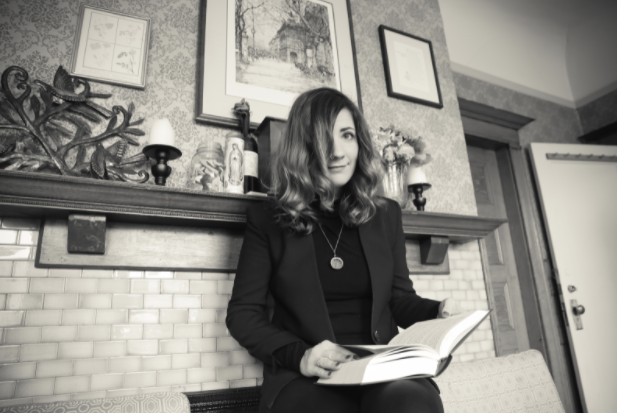
Rotten Apples Return to Harvard's Glass Flowers Exhibition
What you have heard is true—
something rotten once got us
from our houses, from our beds
where what was there may
or may not have been.
Remember, my darling, my sweet,
that a blistered and blackened
thing, a thing representing life/
sin itself, was a cause for art.
Gave a man, many men,
a lineage of pride.
The moon rose tonight as usual,
no spore-filled scab. As ivory
as the cut belly of an apple
sliced to share. Nothing noxious
to point to, say you.
The world of museums and love
are, as it turns out, through the machinations
and designations of man-made things,
defined by abstractions: Security,
beauty, even, in our worst days.
One day, Blaschka told his son, yes—
American Literature
for Joey
“the silver lamp,--the ravishment, --the wonder--the darkness,--loneliness, the fearful thunder” John Keats
There’s a billboard with the route 66’s version of June Cleaver, holding a pie underneath block letters HO-MADE PIES, which is how dry towns get their jollies, I guess.
We buy coffee in cups so thin the joe becomes us and we never regain our human shapes, and I say to you I wonder where they keep the half-bull man and you shotgun back I’ve spent my life asking that like the sharp shooter you are.
Who wouldn’t want to be the son of a bull and a damned woman
we are all sons of bull and damn
you’ve gone West to find everything or me
and look at girls the way I look at girls who are bad for me. Like a desert
through slatternly windows. This is America: the big-pricked statues statuary in their old-growth knowing:
in the end--spoiler alert--we’re both after the wrong bandit, the bank gets robbed, the two women who should be lovers but aren’t arc their Caddie like a rainbow into the lavish vaginal canyon at the last moment, the whale gets away, Faulkner’s pretend mother doesn’t get the burial she deserves, we have to choose between Liz Taylor in a kerchief or James Dean with his shirt stuttered open, and we can’t---
moon moon
Now there’s snow on the ocean, which is meant to confuse us
and does, though not because we are unprepared for it
but rather because the sight of it reminds us
of the static-hearted parts of our bodies as they prostrate
themselves in years-over-yonder: exploratory attempts
to find warmth—not unlike a surefooted expedition—,
in the disappearance of everything ripe—now covered
with snow’s annihilating speeches—, in the blank stares
of our children as they amputate themselves
from us, in the cloudscape of come forgotten to be enjoyed,
on the snow of a down comforter at which we’d first begun
(circle back to exhibit A), in the cold expanse following
the question am I like winter to you, in the unspooling
that happens when we, I, I mean I play a memory
over again for the too-many-ith time, in the television’s
convex and prudish eye, in the snowy sound of over-use,
in the way empty feels like brain-freeze, in the brilliant
and nearly-neon white of the sign which mourns vacancy
even if everyone around us says off-season, says they love
the snow, the way it makes well-conquered land possible again.
earthling
You’d never guess it (oh, good, a game!),
but here we are many days without our bouncing
blue ball, our terrestrial ball and chain, our baby
planet—not even a note as it slipped from the rearview.
Now a footnote in a book that, were we on said earth,
a man would walk door to door to sell as a collection:
The History of Aquamarine, Abridged. But we are not earthlings
any longer, with no taxonomical replacement in sights. Stars
coronate the endless black, winging it, and here we are:
the most select, the most tourist. The most inclined
to shoot the earth for the moon’s moon, to go nil,
to bankrupt because it is the most American thing to do,
though America was left behind, no matter nationality—
only the home, the journey to and from.
Let us not
seek solace from the callousness of quietude, for it is what exiled us.
Jun 9, 2021
Jun 9, 2021
59 min
Daydream Believer
Listen in as pop culture, nostalgia, and formal craft converge in a discussion of poems by Jeff Royce. As of this recording “we are not the epicenter,” but it feels as if we have all the time in the world as the pandemic spirals on just outside the sound of our voices. Royce has us remembering The Monkeys and Lava Lamps, recalling Larkin’s famous insight that “They F&^% you up, your mum and dad,” and imagining angel trumpets and panthers (both Rilke’s famous panther poem and Teju Cole “On The Blackness of the Panther”). It’s all about resonances and craft, slushies. (Or resonances and interventions: Dear Queer Eye crew, Kathleen needs a home-office resurrection!). If you are looking for more fabulousness, Kathleen recommends two podcasts, Jonathan Van Ness’ “Getting Curious” and Sam Sanders’ “It’s Been a Minute.” Samantha suggests the film Now and Then. Jason is loving Andrea Lawlor’s Paul Takes the Form of a Mortal Girl.
This episode is brought to you by one of our sponsors, Wilbur Records, who kindly introduced us to the artist A.M.Mills. The song “Spaghetti with Lorraine” opens our show.
BIO
Jeff Royce lives and teaches in South Florida. He is elaborately married with two refreshingly complicated daughters, though he is less enthusiastic about the two dogs and fat lizard who also live with him. Jeff was social distancing before it was cool.
At the Table: Jason Schneiderman, Samantha Neugebauer, Kathleen Volk Miller, & Marion Wrenn
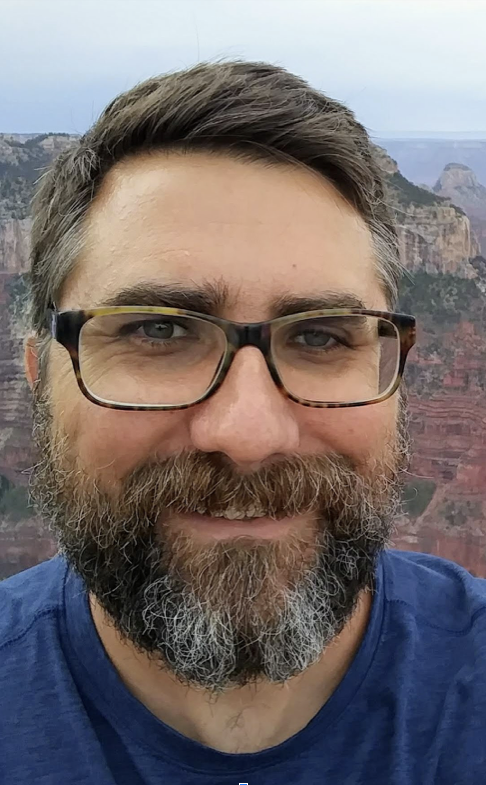
WATCHING A PANTHER
AT THE PALM BEACH ZOO
Her chirps and caterwauling are
the echoes of an empty sanctuary.
She lowers her stare, pulls back
the fat of her mouth, but the growl
rumbles in from another pen.
Thunderheads build on backs
of roseate spoonbills, restless
in the next enclosure.
Their pink shadows and the stink
of flamingo shit are enough to remind me
my heart is a muscle.
Near the reptile house, wooden manatees
drift on an ocean of organs.
The music is coming from somewhere else.
LINEAGE
Man hands on misery to man.
It deepens like a coastal shelf.
--Phillip Larkin
It began with horseradish in her mashed potatoes,
her father slipping it in before dinner.
(It began much earlier I suppose.
But this is my mother we’re talking about, younger and thinner
and unaware that fathers can be cruel.)
She dove in without sniffing, and since that day something within her
grew guarded and deep. They met in high school--
my father and she, I mean. She let him kiss her breasts
only through her shirt, so he imagined each one a jewel.
Think of the let down when he saw them undressed,
not cut as he’d expected them to be,
not flawless as the ones he had caressed
under her blouse. He learned to live with them, though; he
learned how not to ask for very much,
to ignore her responsibly.
Her body arched, in dark, under his touch.
They fumbled dutifully until it hurt.
My brother soon was born, a crutch
to hold my mother up. But he wouldn’t wear a skirt.
She cried until her shoes were damp,
and my father taught him how to play in dirt.
Let’s try again, she begged--words pressing like a stamp
on my brother’s soft head--and I, too,
was pushed into this world like a rudderless tramp.
I’ll never know for sure if this is true.
ANGEL TRUMPETS
I have this 1960’s sitcom desire
to frolic on the back lawn.
Our shirts will be fashioned after white sides
of ranch style houses.
Our hearts will take shapes
of plastic Adirondack chairs.
The kids can blow bubbles that’ll satellite the shed
like little acrylic space shuttles.
In the linen-scented afternoon, the backward-stumbling sunlight
will brighten angel trumpets,
drooping polished shuttlecocks
swinging like clean sheets in the here-&-there breeze.
& I’ll pick one for you, & you’ll remark
that the day has smelled just like a fresh haircut,
then you’ll kiss my cheek with the same precision
with which you clip coupons
& the girls, giddy from so much Frisbee,
will roll their eyes & mock our tenderness,
& we’ll chase them & they will feign terror
& scream like they mean it,
& we’ll prolong their terror by pretending to just miss them,
but eventually we’ll tackle them & splash onto the lawn
which has always been just weeds.
We’ll lie there breathing for a while, the four of us,
our heads forming a circle in a way
I imagine might have made an excellent cover for a Monkeys album,
before one of us, probably me, will spot the vultures circling,
not menacingly, but in a shiftless, existential sort of way,
drifting on lava-lamp currents, & I’ll note
how they resemble jets, not in shape
but in the way how we feel about them flies out in front of our voices.
& then someone, probably you, will say,
We are, after all, sitting in weeds, & I’ll say,
What? & the girls will squeal & scramble to the badly cracked patio
where they’ll pick beggar ticks from one another’s backs,
& by now it’s dusk dark
& a fat tarantula moon is crawling up over purplish clouds.
Then, Shit, what’ll we do about dinner?
&, Papa, I still have homework to finish!
& Goddamnit, why are you crying? Stop crying!
& you tell me we don’t even have an angel trumpet tree,
& your breath smells like sparklers,
& the sparklers, in the black air, are scrawling something
that vanishes before I can get it.
I don’t get it, I say, & you say,
You never get it, & I say,
Just go to bed, you can do it in the morning.
& I put a movie on so we can all sleep
& we eat popcorn & freezer pops for dinner, & I tell the kids,
That’s life, & they’re like,
Great!
May 25, 2021
May 25, 2021
52 min
This episode is all about craft and connections: literary craft and professional connections. In the notoriously small world of poetry and creative writing, should editors recuse themselves from making editorial decisions? Things get wonderfully complicated when you know a poet— be it from grad school, from a workshop, from a conference. Or from dressing up in potentially crass Halloween costumes. (Listen for further confirmation that Jason and Kathy are soul mates via their 90s -era matching Princess Diana getups, complete with steering wheel as accessory and pals playing paparazzi). In addition to the nuances of professional ethics in poetry land, we talk sonnets and the divided self as we discuss 2 poems by Charlie Clark. Clark’s archive of references ranges widely—from Death Grips to inept gladiators to the power of grammar and etymology to charm readers. At one point we’re making rock n’ roll hand gestures to indicate his poem’s caesuras; at another we’re mesmerized by the way Clark works within the confines of 14 lines right under our noses. If you like what you hear, Clark’s new book of poetry The Newest Employee of the Museum of Ruin will be published by Four Way Books later this year.
At the table:
Samantha Neugebauer, Jason Schneiderman, Alex Tunney, Kathleen, and Marion Wrenn
This episode is brought to you by one of our sponsors, Wilbur Records, who kindly introduced us to the artist is A.M.Mills whose song “Spaghetti with Lorraine” now opens our show.
Charlie Clark studied poetry at the University of Maryland. His work has appeared in New England Review, Ploughshares, Threepenny Review, and other journals. A 2019 NEA fellow, he is the author of The Newest Employee of the Museum of Ruin (Four Way Books, 2020). He lives in Austin, TX.
You can find him on Facebook.
The Beast I Worship
I light my torch and burn it.
I am the beast I worship.
—Death Grips, “Beware”
The beast I worship doesn’t blame
the tree for its lithe, expanding
glamour, yet beneath a sky full of blue
kingfishers crying tears from the tree
the placard with its Latin name
laid out in a lush calligraphy
and as many as he can reach
of the narrow green articulations of spring
starting to feel their way into the air;
before he finally takes leave completely,
the beast I worship climbs in and sets the whole thing
burning down. The beast I worship
offers meek relief. What sometimes feels like
beauty sometimes feels like grief.
Address To That Inept Gladiator Timorous
- Supposing the Futility of Language as a Means of Protecting Oneself from Harm
Your armor amounts to the skin of some very large dead beasts,
yet you retain such glamour. If you don’t know the word,
that’s because the Scots hadn’t yet invented it. There wasn’t enough
enchanting mist strewn on even a rainy Roman summer morn
to veil the parts your opponent hoped to hack from you. Had there been,
had a cloud become the air around you, had you survived and done it in this way,
had the poets seen this and gone crazy, probably you still would have been
stuffed back into your cage, fed no more gruel than usual by the mulch-
hearted man who ran the place before next week’s show where he’d charge double
for all the people eager to see some new brute cut your meek gray swarm in two.
Pardon, please, these aimless suppositions. Did you know glamour
is only a corruption of grammar ? This proves nothing but the impossibility
of any word’s use to the dead. No word will build a door out of air
and let you step safely through it before it grammars shut.
- Concerning the Awfulness of Audiences Across Time
Should you somehow fast-forward through millennia, it would likely be
the sons of paper-product scions laughing at your harm. They will be no less noxious
than whoever watches you now. before I waste our time trying to explain the value
of flowered vines embroidered on what people wipe up grape-juice spills and urine with,
let me just call them rags. It is a sound so plain I hope it makes sense no matter what
the tongue or age. It’s rags the audience throws at you, not that they want to offer salves
or congratulations; they simply want to throw things at you and rags are the cheapest thing
on hand. Were I to acknowledge that the word audience existed in your tongue,
what would that matter, except for how it meant something more like listening then,
which means irony existed then too, as some hack-eared opponent hollowed out your mouth
and to slow the bleeding you filled it with the audience’s rags, the loosened red thread-ends
of some drifting in the wind from your mouth toward the lords drunk at center court,
who hear only their own voices naming which next portions of your body they have
paid good money to see your rivals cleave?
- Cataloging Some of what Awaits Him After the Morning’s Dogs Are Done
Heaven is an archive full of friends
whose legs have been restored. You can walk
with them through the ever-longing haze and regather
the other parts both they and you had scattered,
heads and brains and arms and tongues and eyes,
the eyes most especially, because there is so much
now that you are out of the arena’s daily dust and blight,
out of the darkness of its catacombs; there is so much now
for you to gaze at, it is worth acknowledging
the Norseman who would, drunk at sea some mist-
decked century hence, invent the verb to gaze as a variant
of to gape, what does not describe a wound exactly
but does suggest a body breached as well as it does awe,
which in this heaven’s tongue is infinite.
Apr 26, 2021
Apr 26, 2021
1 hr 9 min
POEMS BY KAILEY TEDESCO
THREE POEMS ACCEPTED
April 28, 2020
Bloomwards & Eggsome
What’s your background, Slushies? Sounds like a loaded question, right? But it’s really a reference to your choice of green-screen background Zoomery. This episode opens with a larking conversation about our current delight in Zoom’s capacity to allow us to upload virtual backgrounds for our physical spaces. (The discussion of poems starts at 8:01 if you want to skip the banter). Kathleen’s surrounded by tulips (while she’s actually holed up in her 3rd floor garret, with a dormer ceiling making her look like Alice in Wonderland). Jason is perched in front of IRL bookcases. Samantha is podcasting with her kitchen over her shoulder. Opting for a plain white wall, Marion nonetheless dons a seriously fringed top in honor of Jason’s signature leather jacket. And Alex Tunney, long-time PBQ editor inducted by our dear pal Daniel Nester a million years ago, joins the podcast for the first time and rocks a Piet Mondrian background. (Nicely done!). All of which serves as a perfect set up for an episode dedicated to poems submitted by Kailey Tedesco. Tedesco’s poems are full of magic and mysticism, shadows and spells. Her work moves across a range of styles—from an ekphrastic poem inspired by Hilma af Klint’s magnificent paintings to a reconfiguration of creepy childhood legends (like Bloody Mary) while playing with forms. We were drawn to the process-based mysticism, speculative feminism, and feminist horror coming through these poems. And Kathleen jumped in and read #7, because…#7.
THE DISCUSSION BEGINS AT 8:49
Recommended Reading:
Marion’s raving about Bernardine Evaristo’s Girl, Woman, Other
https://groveatlantic.com/book/girl-woman-other/
Samantha’s loving Carmen Maria Machado’s memoir, In the Dream House
Jason’s devouring Brenda Shaughnessy’s So Much Synth
https://www.coppercanyonpress.org/books/so-much-synth-by-brenda-shaughnessy/
And we are supremely grateful for the poetry of Eavan Boland, who passed the day before we recorded this episode. Here is her masterful poem, “Quarantine.”
This episode is brought to you by one of our sponsors, Wilbur Records, who kindly introduced us to the artist is A.M.Mills whose song “Spaghetti with Lorraine” now opens our show.
At the table:
Kathleen Volk Miller, Jason Schneiderman, Marion Wrenn, Samantha Neugebauer,
and Alex Tunney
Kailey Tedesco is the author of She Used to be on a Milk Carton (April Gloaming Publishing), Lizzie, Speak, and the forthcoming collection, FOREVERHAUS (White Stag Publishing). She is a senior editor for Luna Luna Magazine. You can find her work in Electric Literature, Fairy Tale Review, Gigantic Sequins, and more.
Her Instagram & Twitter is @kaileytedesco

- 7 adulthood
after Hilma af Klint
you’ll remember me
as a zygote
scrambling towards
cronehood
on its haunches; i grow
bloomwards. my teeth
outstretched
on the front lawn
during the violet
hour, spelling
spells disguised
as poems.
hermit to hermit;
we kiss
to form
a single nautilus,
sistering
divinity. tell me
when was it
you last
heard from
your spirit?
my guides
have abducted
me quite
violently
from the tulips
i’ve found myself
asleep in.
it is all but
true; my eggs
have clasped
in my womb
like pearls.
my intention
is not to create
life,
but death.
though, i misspoke —
my true intention is
to create
life out of death.
find me in the portal
on the left, right next
to the electric
fences of my
darknesses, all
clumped.
inside the beheaded apartment
the sky whispers something eggsome then breaks its rain, thick & frozen. i crave the cigarettes
i’ve never smoked; not marlboro. i picture you before the time everything could kill you, glamour
in your beehive & twiggy dress, smoke haloing the mini-chandeliers. i beckon for you
to gemstone through me, egyptology — my lipstick glyphs on the edges of your sink. there are
teeth in the walls, did you know that? whole fangs, pulled clean at the root, & toenails, too,
flaking from the ceiling. i lived with estate sale busts of nefertiti, estate sale victorian lace,
bagged & labeled with the year, estate sale chaises of green velvet. green because it reminds
me of france, where i have never been, but where the sun is a vintage wallpaper. in the window
across the way, women in mourning bonnets have st. columba hands holding tight
to the dogs in their rosary chains. the plexi glass cracks in the shape of a crown or witch hat. there
is no bathroom but the one with the freckled clawfoot. the cats have become anxious with the
roach-scroll of the floorboards. we say they perform theatrical productions — one ophelia,
lounging in wet lavender sogging the carpet-shag, one desdemona, clawing at tissue for
handkerchiefs. something is crawling in me, teeth in the walls of boning. i wear the whole house
that used to be yours like a corset. this place is no good for us, i tell your lack of existence. all
the bodily fluids of every other tenant filth me — all the living hosts whispering in tune with the
mold water-logging my pillows. bring me my peacock & she-bear, my estate sale saints. it is time i sic them on my landlords, bring back your sight & my seeing. i shall go ahead
and make my own kingdom out of deadbolts.
bloody mary x 3
there goes my top skull jack-in-the-boxing from your suzy-talks-a-lot eyelids. maybe i’ve been dead a long time. maybe i’ve been dead never ever. live with me forever in the medicine cabinet
where my limbs smoke ring doll-wards through your own reflection. spinning my head
all the way around is what i do for a pageant talent. every time you call my name,
you put a knife in it—my face wounds towards yours. i become nothing but a blood-aura
on your tooth fairy bedding. unlike yours, my wedding gown will lack knuckle-buttons & i envy.
you should have made me more opulent in the story where i’m saint-corpsed with gumball rings on every finger. let me live display-cased at the dead mall, cradling the body you’ve made us.
i’ll hold you too, if you’d like. we can lace together, spine glued to spine, a jar of our parts
now puzzled. then my head, free by comparison, can decapitate & become a locket
facing the wrong way. the backstage of night is what i’d like to see most—everything zombifying from the dirt of sky. i see the same stars as you.
there goes my head. i’m coming back to life.
An array of relevant links:
Hilma af Klint at the Guggenheim
https://www.guggenheim.org/exhibition/hilma-af-klint
And here is the Guggenheim on No. 7 Adulthood:
(Or this link, too, for more images)
https://arthistoryproject.com/artists/hilma-af-klint/group-iv-no-7-the-ten-largest-adulthood/
The legend of Bloody Mary
Debunked:
https://www.snopes.com/fact-check/bloody-mary-story/
And scienced up:
https://u.osu.edu/vanzandt/2019/04/17/bloody-mary-from-the-bathroom-to-the-laboratory/
Apr 8, 2021
Apr 8, 2021
55 min
| Courtesy of www.FridaKahlo.org |

Frida Khalo’s 1946 oil painting The Wounded Deer
Dear Slushies, on this episode we focus on the heart of literary editing and pose the age-old question: “What do you like when you like what you like?” We also break our own rules on this episode of The Slush Pile. Instead of flipping our thumbs at the end of each poem we’re scheduled to consider, we decide to discuss a group of poems by Shari Caplan as a suite. She submitted three poems about the female gaze, and we’re mesmerized by them. With Kathleen, Samantha, and Marion at the table, it’s an all-female crew discussing three of Kaplan’s poems, each one focusing on a powerful woman who worked in and with images: artist Frida Kahlo, psychoanalytic film theorist Laura Mulvey, and Lee Miller (check her out in “Lee Miller: In Hitler’s Bathtub.”) Listen in as we consider Kaplan’s ekphrastic project as she creates these experimental monologues. We’re flying by the seat of our collective pants, trying to muster what we know about Kahlo, Miller, and Mulvey, half recalling Maya Deren’s surrealist short film Meshes of the Afternoon (1943) and trying to accurately summarize Mulvey’s supremely influential essay “Visual Pleasure and Narrative Cinema,” all the while recalling Dali’s three flying cats, and being serenaded by Sam’s cat Bowie while being observed by Marion’s cat Imia, who joined us at the editorial table. “Dear Pandemic Diary, Day 79, our animals want in on the editorial process. We want to call them ‘Podcats.’ Someone should intervene.”
With thanks to one of our sponsors, Wilbur Records, who kindly introduced us to the artist is A.M.Mills whose song “Spaghetti with Lorraine” now opens our show.
POETRY DISCUSSION BEGINS at 4:00
Author Bio
Shari Caplan is the siren behind "Advice from a Siren" (Dancing Girl Press). Her poems have swum into Gulf Coast, Nonbinary Review, Masque & Spectacle, Tinderbox, Deluge, and more. Caplan's work has earned her a scholarship to the Home School in Hudson, NY, a fellowship to the Vermont Studio Center, and nominations for a Pushcart Prize and a Rhysling Award. You may encounter her as "Betty BOOM: America's Sweettart" giving intimate readings as part of the Poetry Society of New York's Poetry Brothel or ring-leading the Poetry Circus, an in-character immersive event she produces.

website: sharicaplan.com
Facebook: https://www.facebook.com/shari.caplan.5
Instagram: @sharic88
Plus, Marion’s cat insists on a seat at the table.
The Works
"Frida Kahlo (on Frida Kahlo) on the Female Gaze"
Comparison fragments the green-gold of my body. Nothing compares.
As a woman, I see a deer in an arrow forest with my face on and hear palpitating hooves across dry needles. As a deer, I see a woman poking her paint into my wound. What do you see, Diego?
You were called Auxochrome the one who captures (color). I Chromophore — the one who gives. Friendly reds, big blues, hands of leaves, noisy birds, fingers in. Flowers cackle at my ear. Can the female gaze grow fruit in a pick-axe climate?
As a woman, my fingers touch blood. You may have seen it undisguised in the bathroom. As a deer, my blood touches fingers and arrowheads. You might have mistaken it for paint. You may use it.
As a deer, I retain my eyebrows to express the paths of my nerves, which are yours. As a painting, I multiply into flowers and a mountain because my eyes blanket rivers and roots.
I don’t see a mountaintop. The mountain held in the veins of the sky.
"Lee Miller on The Female (Gaze)"
Don’t! melt until I’ve lit you.
Covered to the neck. A sheet to morph you, size the shine on your
- don’t!
face.
Now, topless
in the metal chair, like an uncorked bottle. Cross
at the elbows, look down at the ants.
Don’t –
cavort until I’ve snapped. We’ll have some when he’s over. Come under. An object
could fall on top of you at any moment. It might be a person.
Tar stretches like a bird’s foot. Maybe life’s a nude
picnic, then the tar comes in with the tide and I’m dyed
blue, wearing a net. I can take my own
pictures, thank you. I can deal with some glare.
If you’re thinking,
it’s not my place to guess what. Maybe this dead coral you’re posing with
puts your father in your head. Maybe a dead
pillow or a case packed. Hide it
behind your face.
"Laura Mulvey on the (fe)Male Gaze"
A bear turned to a lounging place.
Instead of unspooling story
the fe/male leans in her lack
/light against the paradox
of phallocentrism.
Bear/er of the bloody
wound. Subject by being
object/ed.
To exit/exist, she must thwart
the male ailment, fuck Freud.
Virgin/Vixenhood fantasies.
Ropes hissing the bedframe.
All the men I know want to do it.
Man/ipulation.
Active/male/passive/female/active/male/passive.
Act/I’ve/male/pass/I’ve/fe/male/act/I’ve/pass/I’ve
Activate!
How does the bearskin rug become a bear again?
Mar 29, 2021
Mar 29, 2021
40 min
How big is an alligator heart, Slushies? Have seen the wingspan of a Sand Hill Crane (a bird once mistaken for the Jersey Devil)? And what happens when you put Mentos in your soda? Life and its peculiarities, its soaring losses and aching beauty, and its utter, utter absurdity come barreling at us in “a flood of images” in Ryan Bollenbach’s poems, 2 of which we consider on today’s episode. Bollenbach has us recalling Willem Defoe at Sgt. Elias in Oliver Stone’s Platoon and envisioning Florida’s “serrated coast.” Cue Samuel Barber’s “Adagio for Strings.” Bollenbach’s second poem “My Lover Squawk Squawks and then Explodes” demands we take it on face value; the title is on point. Listen for a fabulous meta-reading and feel the way the poem wants you, too, to be Seagull. We couldn’t resist – a la Dillard’s “Living Like Weasels”-- and spun out into our own squawking flock. Listen in as we welcome longtime member of the PBQ fam Warren Longmire to the podcast. His good work has a wide reach these days, keeping poetry thriving via The Nick Virgilio Writer's House and Blue Stoop.
Poetry discussion starts at 3:30
Author Bio
Ryan Bollenbach is a writer with an MFA from University of Alabama's creative writing program where he formerly served as the poetry editor for Black Warrior Review. He reads for SweetLit: A Literary Confection and Heavy Feather Review. His writing has appeared or is forthcoming in Timber, Colorado Review, smoking glue gun, Bayou and elsewhere. Find his tweets @SilentAsIAm, more writing @ whatgreatlarks.tumblr.com

The Works
"Adagio For Strings"
No one wanted this smoke. Not Willem Dafoe or the albatross
Whose wings Willem borrowed as splint for his splayed arms
As if real bullets ripped through him. Not the wisteria
Planting its tendrils on the ground’s sweaty palm
Like the sun taking pennies as a return investment on heat.
I drove my truck at forty miles per hour over the grey-blue asphalt
And looked into the eyes of some Sandhill Crane
Crossing the road unfazed by the wind whipping off my steel bumper.
On the radio, there was a composer giving a talk about the hope he found
In the last note of Sam Barber’s “Adagio for Strings.”
As if of body memory, Mark’s corpse rose from a bare patch of sand
On the side of Interstate 75! As is of body memory,
Chris’s corpse rose from the gated-in parking lot
Of a pain management center in Northeast Tampa!
The ground swallowed every traffic sign in immune system response
After swallowing them both on the same road.
I drive that interstate northbound to escape the gulf and the ocean
Overtaking Florida’s serrated coasts. I keep only the smoke,
The Blackhawk’s wingspan, and the violin notes
Piled on top of each other like bodies to be burned. I remember
The way the Sand Hill Crane did not flinch.
I cannot put my tongue around that.
Under the trees where I slipped into dreams, I woke skewered
By what the composer said, and the question the crane’s eye’s asked in response.
From my morning stomach, I pulled speakers made of the hearts of the alligators I have eaten.
Placing them in between the saw palm bushes, I started them
Broadcasting “Adagio for Strings” in a staggered order.
In the clearing, there were bushes of Pentas and Evolvus
In the shape of soldiers kneeling to the sound. There were squirrels kneeling.
Snakes bending their bodies to kneel. Bobcats kneeling.
Chris kneeling. Mark kneeling. The dusk sun made shadows
Of the withered tops of trees. The wind blew its violin trills
And all the hearts I planted fell on their side in unison,
Restarted in unison from the top. Just as the shadows started to grow,
Blue smoke rose from the grasses.
"My Lover Squawk Squawks and Then Explodes"
We spent the morning before just talking.
He said your body is slick like construction equipment, how it can move the sand to make a runway for my unhurried strut.
He said your body is like a French fry on a laminated paper plate.
In the high noon sun, I said you have a survivor’s disposition. It makes you gray.
Slick and survivor made us think of our own days of darkness, his coated in motor oil on the gulf coast in search of something white, mine coated in olive oil, garlic, sea salt tears and smooth jazz.
I told him his gray feathers and white food made me think of marbles.
I told him that it seemed odd that he prefers dark drinks when we come out to the beach like this.
He sipped his diet soda and said you just don’t understand, but I saw the white shining in the furthest reaches of his black eyes, that look as if he was already gone.
He walked toward me for a kiss, then changed direction. Sprinted to the white pearl beached in the sand.
I yelled to him as he passed me that I could see how, after living in all that oil, the clean sand, the white, could feel romantic, but inside I was hurt.
He picked the piece from the sand with an instinctual fervor then gave a soul-curdling squawk.
He swallowed the Mentos and exploded like a fourth of July firework over Coney Island.
At the table:
Warren Longmire, Addison Davis, Jason Schneiderman, Kathleen Volk Miller, Samantha Neugebauer, Marion Wrenn, & Joe Zang
This episode happy to thank sponsor Wilbur Records, who kindly introduced us to the artist is A.M.Mills whose song “Spaghetti with Lorraine” opens our show.
Dec 20, 2020
Dec 20, 2020
45 min
Dramatic tension in this episode, slushies! “There are no ties in baseball,” but what are the rules for editorial meetings? What happens when the editorial board splits? Do we flip thumbs, thumb wrestle, or rely on another voice to make the choice? Marion joins us from her “transitional liminal space” in the Marlton Hotel in NYC, while Kathleen and Addison call in from Drexel University, and Jason from his Brooklyn home. We launch into three poems by Sarah Best, an assortment of vivid, imagistic pieces referring to everything from sonograms, vanity, Truman Capote, and “coffee served in mason jars.” In the midst of such scenes, we talk regional accents: Warsh & moisturize—the morning ablutions. We discover that “Context” is king when we mistake the poet’s reference to The Master Builder in her poem "Extended Shots and Long Takes" (27:53) for a reference to a reality TV show rather than the Ibsen play and Demme’s 2013 adaptation, A Master Builder. And we delve knee-deep into the myth of Echo & Narcissus, the namesake for the poet’s second poem Narcissus (13:07). At the end of the podcast we fall into a discussion of the seeming rule-less-ness of Gaelic rugby, marvel at the size of rugby players’ thighs, and ponder the relative legality of edibles in Texas, finally coming away with the mantra: Exfoliate and Moisturize, slushies! Especially “inna winner time.”
At the table: Kathleen, Addison, Jason, Marion, Samantha
Timestamps:
3:10 ‘Echo’
12:27 Team vote
13:07 ‘Narcissus’
26:05 Team vote
27:53 ‘Extended Takes and Long Shots’
38:50 Team vote
Aug 31, 2020
Aug 31, 2020
47 min
Dear Slushies, have you ever heard a theremin? Visited Utah? Tried a baked Alaska? Join us for an episode dedicated to poems by Natasha Sajé, whose work explores belonging, queerness, & womanhood in a flow of humour, insight, and vivid images. In “Dear Utah,” Sajé takes us on a trip through her connection with her now-familiar state, which she “complained about for one-third of [her] life”. “Is Homosexuality Contagious?” directly addresses the reader as it contemplates homosexuality, politics, and the way other people's Baked Alaska commands our attention. Finally, “Dear Catilyn Jenner” stops the show. Listen in as the editors collectively lose it. It’s goosebumps and tears in an episode in which the editors wear matching tunics and Jason’s thumbs cry. If you can't wait to get right into the poems, you can skip to the 4 minute mark.
At the table: Marion Wrenn, Kathy Volk Miller, Jason Schneiderman, Samantha Neugebauer, and Joe Zang
This episode is brought to you by our sponsor Wilbur Records, who kindly introduced us to the artist is A.M.Mills whose song “Spaghetti with Lorraine” now opens our show.
Aug 4, 2020
Aug 4, 2020
51 min
It’s a rainy day in Philly, even rainier in NYC, and curiously blue in Abu Dhabi. We’re wondering whether you can OD on zinc, what’s happening on planet Saadiyat, and whether ghosts are real. These poems are full of curious imagery, versatile movements and occasional hot-pants and sneeze-ghosts. We loved journeying through each one, which took us, “artfully all over the place.” We learned about Caroline Knox’s poems, cellist Miroslav Rastropovich’s work, and Culpeper’s Herbal. Thank you, James Grinwis!
This episode is brought to you by our sponsor Wilbur Records, who kindly introduced us to the artist is A.M.Mills whose song “Spaghetti with Lorraine” now opens our show.
Jun 21, 2020
Jun 21, 2020
41 min
Dear Slushies, join the PBQ crew (which includes a freshly-tenured Jason Schneiderman) for a pre-pandemic recording of our discussion of 3 poems by the wonderful Vasiliki Katsarou’s work. Be sure to read the poems on the page below as you listen. They’ll require your eyes and ears-- and “a decoder ring.” The team has a grand old time explicating these artful poems. The muses are sprung and singing in us as we read and decide on this submission. Katsarou’s poems teach us to read them without projecting too much of ourselves and our current preoccupations onto them. We’re reminded to pay attention to what’s happening on the page. But synchronicities abound! Before we know it we’re ricocheting off of the poems’ images and noting the wonderful convergences the poems trigger - we hear traces of Wallace Stevens “Idea of Order of Key West” or Auden’s Musee de Beaux Arts. (But first we check in with each other, cracking each other up in a pre-pandemic moment of serious lightness. We’re heard that “Science” shows Arts & Humanities majors make major money in the long run. Kathy reports that “the data on success” shows that participation in Nativity Plays is a marker for career success. Samantha confesses she played Mary Magdalene in a Nativity Play. Marion might have been a Magi. And many of us were reindeer.. Also, Donkeys do better than sheep over time (which may or may not have been claimed on “Wait, wait… don’t tell me!”). Editing a Lit Mag shouldn’t be this much fun, Slushies. Listen through to the discussion of the 3rd poem’s deep magic and craft. And listen to our editors’ cats chime in).
Addison Davis, Jason Schneiderman, Samantha Neugebauer, Kathleen Volk Miller, Marion Wrenn, and Joe Zang

May 12, 2020
May 12, 2020
47 min
Be warned. We love the writers who submit to PBQ, slushies. We love doing this podcast. And we love you; we love that you listen to us discuss and deliberate. In short, slushies, as Mister Rogers would say: “1-4-3.” One. Four. Three. (I. L-o-v-e. Y-o-u). (Get it?!). We do. It’s hopeless. We’re hooked.
We discuss 3 poems by James Pollock in this episode. Join us for this wonderfully raucous discussion of craft and precision, technology and point of view, and big ass fans™. Addison is sleep deprived (too much late night coffee). Jason is in his jammies (sleeping in after hosting KGB’s open mic Monday). Marion is a cheerful maniac in Abu Dhabi, and Samantha calls in from Dubai.
Reminding us of Pinsky’s First Things to Hand, Pollock’s poems spin us around, bathe us with craft, and make us re-see things, especially the power of poetry. Yup: That sentence actually refers to all 3 of the seamlessly crafted poems Pollock shared with us-- “Ceiling Fan,” and “Shower,” and “Spectacles,” And yup, by calling your attention to it, we just exposed our seams. (Ugh. Craft is hard. For poets and coffee roasters. “Form makes the language seem inevitable,” sayeth Jason (who is also “completely obsessed with tap water”). And great coffee should have a proper name. Ask KVM. Listen to the end of the show when she describes naming a new coffee for “Cup of Bliss” coffees in Collingswood, NJ. Spoiler: “Be My Neighbor!”).
At the table: Joe, KVM, Samantha, Addison, Jason, Marion
Apr 22, 2020
Apr 22, 2020
27 min
Well before we found ourselves in the COVID 19 pandemic, we had the sniffles on this episode, slushies. But neither head colds nor hangovers will keep us from the great pleasure of discussing Daryl Jones’ “Not Your Ordinary Doppleganger.” The poem’s gentle humor and delightful details have us in stitches: the poem puts the “P” in poetry, the “P” in PBQ. (There is a badly delivered dad joke buried in that sentence, slushies, apologies-- trust us, the poem does it better). Listen in as: Jason reveals his mother was actively trying to gaslight him when he was 5; Samantha reveals the science of scent and stepmothers; and we trade Shakespearean puns and tips on slankets. All of which made us think about father and fatherhood, those we’ve had and those we miss.
Daryl Jones recently retired from a career in academic administration and rediscovered the passion for writing that he had set aside more than twenty-five years ago, after receiving an NEA Fellowship, serving as Idaho Writer-in-Residence, and winning the Natalie Ornish Poetry Award from the Texas Institute of Letters for his book Someone Going Home Late. Since courting the muse again, he has published poems in The American Journal of Poetry, The Gettysburg Review, New Ohio Review, Poet Lore, The Southern Review, and elsewhere.

Mar 22, 2020
Mar 22, 2020
30 min
Coffee: a security blanket, health-hazard, and world-tilting device.
Hey slushies, today we’re discussing Frank X. Christmas’ poem “Coffee, Ice Cream.” But first! Alien business people are descending on Drexel’s cafeteria (“the place… where people eat?”) and our editors are braving malfunctioning footwear and costume parties. Much mayhem at the top of this episode, Slushies, so if you’re eager to check out the poem and the critique you can skip ahead to minute [11.35]. Frank X. Christmas’ poem is both surreal and nostalgic. Somehow it acts on us the way a good cup of coffee does: we feel a little bit separated from space and time. The editors discuss how it drags us into a reverie where everything spins and flows. We are in flux. They then debate about the age of the girl in the photograph and the ways time seems to have collapsed. There might be feelings of loss embedded in this work, but there is also warmth, comfort, and the sweetness of a vanilla scoop. After their discussion the editors lay out a few of their recent reads including The Dutch House by Ann Patchett, Fleishman is in Trouble by Taffy Brodesser-Akner and The Tradition by Jericho Brown.
At the table: Marion Wrenn, Kathy Volk Miller, Jason Schneiderman, Samantha Neugebauer, Addison Davis, and Joe Zang.
F.X. Christmas, a lifelong New Englander, was born and raised in Boston, Massachusetts. He studied accounting at Bentley College and journalism at Northeastern University. His poems and stories have appeared in Northwest Review, Seattle Review, Manoa, Gulf Stream, Midwest Quarterly, and other magazines. Today he is working on linked stories, longer manuscripts, and more verse. He lives in the suburbs with his wife, his daughter, and the family dog.
Feb 7, 2020
Feb 7, 2020
58 min
Hello Slushies! Today, we put the “pee” in PBQ when Jason reminds us not to over-hydrate (it’s a thing!). Marion is in the Philadelphia Studio and Samantha in Portland for the Tin House Summer Workshop, which triggers an epic donut-discussion. Must-try doughnuts: VooDoo Doughnuts in Portland, Federal Doughnuts in Philadelphia, and Dough in New York City. After daydreaming about desserts, and resisting the bullying power of nutrition Apps, we dive into three poems by Tanya Grae. These poems are included in Grae’s book Undoll (YesYes Books, 2019). All are ekphrastic, allusive, homage poems-- and we pour over the way Grae is adapts, innovates, remixes, and recreates poems across these poems. We’re drawn to the layered conversation and formal prosody and synchronicity she sets up-- our thumbs are flipped, our heads are spun. The first is after Lorca’s “The Unfaithful Housewife” (translated by Conor O’Callaghan). The second is an intriguing and baffling poetic rant, “Duchess, A Found Poem.” And the final, the tripendicular “Dear Ozy,” triggers the sound of thinking from the Slush Pile crew: we ponder maps and palimpsests, spirals and dimensions, Google searches and precarious empires. Samantha reminds us that someone, maybe Twain, said “history doesn’t repeat, but it often rhymes.” Associative spirals make this conversation a joy.
Short bio:
Tanya Grae was born in South Carolina while her father was stationed at Shaw, and she grew up moving to random Air Force towns like Little Rock, Minot, Tucson, Panama City, and Homestead. This survivalist training prepared her for a litany of jobs, academia, and parenting three humans, two of whom are now adulting. Her debut poetry collection, Undoll, is forthcoming from YesYes Books in fall 2019 and was a National Poetry Series finalist. Her poems and essays have appeared in AGNI, Ploughshares, American Poetry Review, Prairie Schooner, Post Road, and other journals. She now lives in Tallahassee with her youngest daughter who loves her despite her inability to help with advanced math, certain her mother’s attempts could bring about the apocalypse. Spotting bad store sign grammar is her superpower; kvetching about it is her weakness. Find out more at: tanyagrae.com
At the Table: Kathy, Marion, Brit, Jason, & Samantha
Dec 17, 2019
Dec 17, 2019
50 min
It’s a beautiful fall day in the neighborhood, slushies. Kathy’s in love with the equinox, Jason’s in his bathrobe, Joe has a new porn name (“Brusque 80”), and Marion is in air-conditioned climate denial. (It’s always sunny in Abu Dhabi!).
We kick off briskly with three poems by Blake Campbell. “The right parts of the brain light up / for the wrong reasons” in Campbell’s “New Year” and our brains can’t stop sparking about the wonderful terribleness of a bad day. Editors spar over the poem’s potential meaning, threatening each other with Billy Joel lyrics, and delight over debating who’s naked, who is reinventing themselves, and who is caught up in a haunting season.
We turn to “Chicken Hawk,” a long, skinny poem that surveys gay nightclub goers from self-depecating “vulture’s” point of view. From the NAMBLA documentary to Death in Venice, from unrequited lust to line breaks, we found lots to discuss. We talk otters. And bears. And Orville Peck. Addison says it best: the poem puts us in the club.
“Dead Moonlight” is full of images that mesmerize-- and make us thumb wrestle. What lingers? What fractures? What moves you-- or moves through you? What makes us love the poems we love?
It’s a brusque ending, slushies, brusque. (Stay on til the end and give a listen to “At Pegasus” by Terrance Hayes at the end of the episode).
At the table: Kathleen Volk Miller, Addison Davis, Jason Schneiderman, and Joe Zang.
Blake Campbell grew up in a farmhouse in Pennsylvania and now lives near the sea in Salem, Massachusetts, where he works as an editor by day and a tour guide by night. He likes dogs and can tell a hummingbird from a hawk moth. His poems have appeared in, The Lyric, The Road Not Taken, and Hawk & Whippoorwill, among other publications, and his chapbook Across the Creek is forthcoming from Pen & Anvil Press.

Nov 16, 2019
Nov 16, 2019
47 min
If you are like us, Slushies, then you love a good duality. We're hooked on the way "belly-up" can mean to be a flop and to roll in closer. So, belly-up to this episode where we discuss two poems by Judith Roney-- “Belly-up” and “Relictual Taxon.” After some laughs about how it’s easy to mistake our basement studio’s relative isolation as evidence of a Zombie apocalypse (and name our weapons of choice), we talk about Marion’s vertigo in her new apartment, Jason’s strategies for alternate side street parking, Samantha’s tips on how to properly pronounce Abu Dhabi, and the global proliferation of pumpkin spiced lattes. Judith Roney’s poetry reigns us in and rewards our focus. Listen in as the The Slush Pile crew has an epiphanic, intertextual jam session with “Belly-Up” and “Relictual Taxon.” We start with “Belly-Up,” which immediately had us contemplating room dividers and family tensions and an array of resonances and literary echoes. Listen for Jason’s references to Rickey Laurentiis’s poems and to Adrienne Rich’s Aunt Jennifer’s Tigers. From “Belly-up” we turn to “Relictual Taxon.” Hear why we love poems that make us smarter about our cultural predicaments. Poetry, climate change, and the anthropocene: no better way to reckon with extinction than huddled around a mic talking poetry & flipping thumbs.
Judith Roney tends to write about dead people (a lot), relatives, the abused & murdered sent to the Dozier "School" for Boys, the forgotten and misunderstood, hauntings & ghosts. The city she grew up in, Chicago, haunts her. Brick, soot, single pane windows, frost-covered, small protection against wind howling in from Lake Michigan. Sometimes it seems everything haunts her. This is probably because she read Rebecca by Daphne Du Maurier when she was quite young, but it's still her fav book ever. Ever.
Judith Roney is the author of According to the Gospel of Haunted Women (ELJ Publications, 2015), Bless the Wayward Boy, (Honorable Mention, Two Sylvias Press), Waiting for Rain (Finalist, Two Sylvias Press 2017), and Field Guide for A Human (Runner-Up, Gambling the Aisle 2015 Chapbook Contest). Her poems and other writing have appeared in many anthologies, most recently in the UK’s Shooter Magazine’s “City” themed anthology, as she “poetically takes the pulse of Orlando following last year’s nightclub shootings in “<80 BPM.” www.jdithroney.com
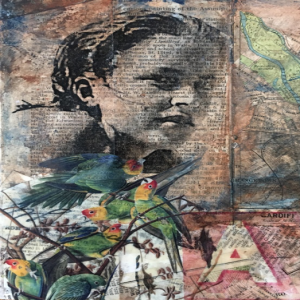
Oct 10, 2019
Oct 10, 2019
54 min
A Toilet in Denver or
Florida is for the Fraught
On today’s episode, we realized that the sound studio needs some naked art! We never thought about it before, but after the Abu Dhabi team and Jason “showed off” about the art in their offices, we got jealous. Joe said we could BYOA, so we’re gonna. Stay tuned.
This got us right off on a tangent about Icarus, a sad one, as he apparently is outside of BMCC, warning students “not to aim too high.” We had our first vote of the day and it was a loud and long “Booooooooo” re: the sheer meanness of its message.
We started with “Shops Like That” which immediately began a conversation on sense and syntax. Which lead us to a conversation of the image system of the poem, the descriptive scene, and whether this poem would have appeared in Fence in the 90’s (ask Jason). KVM didn’t tell anyone, but she loves the poem for its Wooly Bully reference.
We spent at least 15 minutes dissecting the piece, only to have our vote---end in a tie!!!!
We moved on to “Travel Light.” We were smitten by its sprawl and humor, maybe especially the couch catapult (you’ll love that image too). The poem is so dense, KVM thinks there could be chapters and chapters. And the tangent we went on with THIS poem’s was—toilets! (Listen—it will all make sense.)
The next poem we discussed was “Planet’s Climate Reversal.” Spoiler alert: iguanas abound. You’re about to learn a lot about iguanas and to see an image that you might not be able to shake. You’ve been warned.
This poem doesn’t only have iguanas, now, it also has state mottos and led us on one of our two-hour journeys through the swamp lands, filled with rehab scams and Disney World factoids.
The poem gave us the chance to recommend “Dumb People Town,” the podcast where Joe Zang learned that all crimes committed in Florida must be publicly reported.
Stay tuned when the show sounds like it’s over to hear the crew respond to Addison’s silky smooth voice. And more after-the-show news: The poem that ended in a tie was ultimately rejected, BUT, the poem we didn’t get on air, “Egypt” has been accepted! Look for them all in Issue #100 of PBQ!
Alicia Askenase’s poetry jaywalks across the streets of American poetry casting a gimlet eye at every word she encounters. Undaunted, she juxtaposes her greatest joys and disenchantments through sonorous and rhythmic landscapes of unexpected insistence. She confronts the world we live in with daggers and oyster forks, swallows it and returns it to the reader in covert scores. For her, language is primary. Meaning evolves organically from the stolen seeds she sows.

Sep 5, 2019
Sep 5, 2019
52 min
This week, we are bringing you an extra special podcast! That’s right, we recorded LIVE for the first time ever at Philly’s PodFest in the National Liberty Museum. Well...most of us. Marion joined us via Zoom from chilly Cork, Ireland, instead of her usual home base of Abu Dhabi. However, everyone else was on stage in front of old, and new, Slushies! Jason Sneiderman traded up his yellow Parsons table in New York for a yellow Honda, to join us in the flesh. On the other hand, poet and professor Laura McCullough joined us by way of a blue Honda. (And no, Honda did not sponsor this podcast. Unfortunately…) Lastly, present were: Kathleen Volk Miller, Tim Fitts and Joseph Zang (who for once, had the opportunity to just sit back instead of pulling all the strings behind the scenes).
Okay, now onto the incoherent babbling and “sweaty festivities.”
Jason reminisced on how he came to join PBQ, back in the dinosaur ages of the early 2000s, when he was a graphic designer finding his way in the world.
Next, we discussed how online publications were looked down on back in the day. In fact, Jason pointed out a huge contrast to publications today, from online posts being as good as sticking flyers on a bulletin board, to “if it didn’t happen online, it didn’t happen.” Now, podcasting has caught on with just as much speed as online journals. That is why Slush pile has become one of our most prized platforms, as it’s given us the opportunity to broadcast our democratic process that takes place behind the scenes.
Joe expressed hopes that our podcast has made submitters realize that we strive to be gate-openers, rather than gatekeepers. In fact, we encourage all writers out there to do what they want with their personal work, first and foremost, and then let people appreciate their ideas. See, we might be more open-minded than you think!
We went on to deliberate over the “Iowa Method.” This technique is practiced in “brutal workshops” in which peers talk and give their opinions, while the writer stays silent and bares the heat. Do you, Slushies, believe this method is outdated? Or necessary for growth?
Laura went on to give those who may have received a rejection letter from us, or other publications, some encouragement. She told us a story about how editors messaged her saying they cried over a piece she had written, but funny enough, this came in the form of a rejection letter. The point is that some pieces may need some further revision, but it does not mean they are not worthy of being published, one day. Also, just because your piece does not fit the theme of what one publication is looking for, does not mean another will not fall head over heels in love with it. Laura joined us from an extremely unique position: She had her own poetry discussed on an early episode of Slush Pile.
Jason had the audience rolling in laughter when he told us the story of a friend who received a rejection letter for a children’s book. This mother of 2 was told that she clearly had no experience with children.
To conclude our babbling, we encourage writers and readers to visit our “naked meetings,” in which you could meet our editors in a relaxed environment. In fact, we have a public reading coming up September 9th, 2019! All upcoming events can be found on our Facebook page (@painted.quarterly).
ON TO THE POEM! BJ Ward was so brave that he allowed us to read his poem, “Madagascar” in front of a live audience. Tim Fitts described this piece as being “so close to being stupid that it’s not stupid” and “sentimental without being cheesy.”
We praised the film allusions to Citizen Kane and Solaris. As a matter of fact, Marion said it best: The poem is like an “invitation to think cinematically.”
(Side note: When Joe said, “Mad At Gascar,” did you find yourself laughing with him, or at him?)
Tim pointed out a possible “Gen X image system” in reference to Van Morrison, Rosebud (Citizen Kane) and... duct tape? Can a generation really claim duct tape?? The popular joke of duct tape might have resurfaced a few years ago, as prom dresses and wallets, made from this magical-fixer-of-all-things, started popping up on social media. It seems the Millennials might have reclaimed it as their own as they’ve done with Polaroids, high-waisted jeans and anything else to make themselves look more “hipster.”
Our podcast came to an end with a vote from not only the usual panel, but the entire audience. Imagine that, a wave--no, a TSUNAMI--of thumb flippin’!
Well Slushies, if you missed this event, your loss.
Just kidding! Look out for another live podcast next year. In the meantime, we’ll be back in our regular recording studio every other week. Until then, read on!
BJ Ward is the author of four books of poetry, most recently Jackleg Opera: Collected Poems 1990-2013 (North Atlantic Books), which received the Paterson Award for Literary Excellence. His poems have appeared in Poetry, American Poetry Review, TriQuarterly, The New York Times, and The Sun, among others, and have been featured on NPR’s “The Writer’s Almanac,” NJTV’s “State of the Arts,” and the website Poetry Daily. He is the recipient of a Pushcart Prize and two Distinguished Artist Fellowships from the New Jersey State Council on the Arts. He co-founded the creative writing degree program at Warren County Community College in NJ, where he teaches full-time.
Aug 14, 2019
Aug 14, 2019
49 min
This week we welcomed a special guest: “busy writing lady,” poet and food journalist for the Midatlantic region, Tammy Paolino.
Headlining the discussion on poems by Kyle Watson Brown, were standing desks. Yes, the giraffe of desks! We talked about it all: Drexel’s lottery system for standing desks, Jason’s makeshift standing desk, and DYI portable desks being an indication for becoming the President of the United States and leader of the free world.
After desk-related helpful tips, we moved on to discuss the first poem, “Too Many Funerals.” This one had us floored by its “weird” (Jason’s word), syntax and word choices.
This piece prompted a diverse conversation on the term “junkie” and its evolution from a label to a condition. Then, to give you whiplash, the discussion switched to sunscreen. Usually, the only new member of our podcast meetings are the poets being discussed, however, this week we welcomed a special guest: “busy writing lady,” poet and food journalist for the Midatlantic Region, Tammy Polino.
Headlining the discussion on poems by Kyle Watson Brown, were standing desks. Yes, the giraffe of desks! We talked about it all: Drexel’s lottery system for standing desks, Jason’s makeshift standing desk, and portable desks being a qualification for becoming the President of the United States and leader of the free world.
After enough talk on these wooden objects, we moved on to discuss the first poem, “Too Many Funerals.” This one had us floored by its peculiar syntax and word choices. Moreover. our editors felt as if they were in a maze. Listen in to hear if we found our way out!
This piece prompted a diverse conversation on the term “junkie” and its evolution from a label to a condition. Then, just to give you audio and intellectual whiplash, the discussion switched to sunscreen.
Thank you, Marion, for taking the reins and attempting to steer us back in the direction of the actual poem. Unsurprisingly, we ended up in Ocean City, Maryland, despite her best efforts. (Look, we told you Tammy Paolino lives in NJ—of course the shore—any shore--makes sense.) Joe Zang, our outstanding sound engineer, helped us out in regards to nails and teeth, as well. Listen in and it will all make sense.
The second poem, “Cornerwork” also provoked conversation on drug addiction. Then, Jason tried his best to culture some of us “lazy Americans” on how the word “love,” used in tennis, ionderived from the French. The more you know...
The final poem discussed was, “Cagelight.” After reading the first two poems on drug-addiction, this one will surely have you a bit bumfuzzled on how to interpret it. (And you’re right, bumfuzzled is not a word---yet---but we’re trying.)
The editors of PBQ are curious: Why do some submitters remove their poems within days of submission? Should we point the finger at workshops? Or too many drinks at 3 AM?
Speaking of too many drinks, have you ever ordered something off Amazon at midnight and forgotten all about it the next day? And still failed to recognize the purchase once it arrived at your front door? If not, Kathleen will have to explain that one for you.
Slushies, please consider writing more poems with “conspire” in them, as per Tammy’s request. Also-if you missed the “Whitman at 200” events, make sure to mark your calendar for 2119! Until next time, read-on!
Kyle Brown-Watson one of the grumpier baristas in Philadelphia. He has read poetry and fiction on stage for Empty Set Press and the Breweytown Social. He's contributed poetry to Yes Poetry and Luna Luna Magazine. Before that, he worked in advertising, software development, and heaven forgive him, television. He infrequently updates his newsletter Terminal Chill and is working on a graphic novel.
Too Many Funerals
My undertows are not the ones
I show you
Sheets of ice stained with salt and
SPF 78 gunmetal grease runoffs
sucking back the xenon haze
No shells
No towels
No balls of greasy dough
Not even the quiet closure
of junkie needles in you heel to
Mark the hours passing
that vanishing point
Where fingernails and
necks and teeth
Conspire to meet,
Blind on February shores.
Cornerwork
I’d start with the fat veins
Work South
The empty weeping chirps of
valves closing
All the gaps and discs and tremors
that make me
From tooth to toenail
Black on carbon black
suspended in silence
The stupid red haze of your eyelids
and nothing else.
Cagelight
Sugarblasted doorframes
so light you can press and
Drop
To fly
in the space
where the boredom of
transit makes even a wander
into a magswipe
clogged-artery anonymity
of Mifflin streetlamps to rest
your face
in bars and shadow they make for you
chilled and cold rolled and waiting for you.
Jul 31, 2019
Jul 31, 2019
1 hr 9 sec
Well Slushies, it’s summer, which means warm days and summer vacations for the crew, comprised of mostly professors and students. This time around Marion joined us in our homebase of Philly, and Samantha joined us from Portland, where she’s attending Tin House’s Summer Workshop.
In this week’s podcast, we discussed poems by Micheline Maylor. The first of her poems up for dissection was “Your Motto.” This piece made us think about the difference between caring and possessiveness in a romantic relationship. HOWEVER, before we could finish our conversation, we had a little surprise: a fire alarm went off a quarter of the way through our podcast!
Once the crew (all and well) were able to reconvene, Jason had had a haircut and Marion was in North Carolina, as it was 2 weeks later. However, we tried our best to continue right where we left off. It seemed the break inbetween veered the discussion, as our editors had some time to figure out some things that had tripped them up in our first conversation. (Is it just a coincidence that Mercury just happened to be in retrograde this time around?) (And who knew nice people like us could have such passionate feelings about teddy bears?)
“Your motto” reaffirmed for us that perception is everything, as many different viewpoints were concluded from the same event depicted in the poem. For example, Jason was the only one reminded of the film, “The Daytrippers”, which he highly recommends. Britt described the poem as having “warm anger,” which became our favorite phrase of the day.
Next up was “(N)Ever Thought.” The most important question that presented itself from this poem was whether or not anyone used the word ornery anymore? If you don’t use “ornery,” would you consider using “hornery?” (Listen to the episode and make “hornery” part of your lexicon!)
“(N)Ever Thought” was a reflection of “Your Motto,” as it showed us a another version of the same event. Kathleen HATES comparing two poems to one another as much as Tim loves to do so, but this time, we all had to agree that it must be done. Spoiler alert: we agreed on A LOT today!
The last piece, “She tells me,” was one that had our heads spinning. It caused as much disorientation in our crew as that fire alarm…but in a good, poetic way. We never get bored of creating metaphors about how we enjoy poetry, how we measure our own responses. Kathleen loves the metaphorical stomach punch, but Marion came up with a much more elegant one: a poem should feel like a great wine and leave you with a satisfying taste in your mouth (or something like that). We do recommend that you do NOT try drinking wine and getting punched in the stomach simultaneously! But, tune in to join the head-spinnin’ and thumb flippin’!
Now, it’s time for the final recommendations: Sam and Kathleen urge you to watch “Book Smart,” a relatable, coming-of-age drama that had them wanting to watch it again half way through. Kathleen called it a “female-centric” movie reminiscent of Super Bad, but much better, and Sam said it was the first teen movie that did NOT make her feel bad about herself!
Until next time Slushies, read (or watch) on!
Micheline Maylor’s was Calgary’s Poet Laureate 2016-18. Her latest poetry collection Little Wildheart (U of Alberta Press) was long listed for both the Pat Lowther and Raymond Souster awards. She teaches creative writing at Mount Royal University and the University of Calgary.
Your motto
I told you once I love you, if anything changes, I’ll let you know.
- John Wayne
I couldn’t stay faithful after New Year’s eve,
all those aggressive philosophy majors and tequila’s shot.
You and me like the stuffed bears in our son’s room,
propped up in corners, staring, neglected, a bit dusty.
What was to be done after that party? All my switches
flipped, a fuse box shutting down. Click by click.
Time to wrap it up, kids. Last call. Last song.
And I’m sitting here in my corner now, hearing you say,
“What’d you want me to do, punch the guy?”
No. No. No. I wanted you to love me so hard,
that he never asked if I would go home with him.
I wanted you to love me, but you were too busy laughing.
(N)Ever Thought
I’ve been having home-wreck dreams of you.
I’ve got an inside view from our big window.
This is a metaphor, of course, not manufacture, yet.
We stay shrouded in a cloud of disaster.
Dust in the loader bucket, the ideal view ruins itself.
This dream is all I could pull out of the dark.
A toothy, wild punk drunk at the controls.
I get ornery when unprotected.
I’m the wife at the party guarded by friends
husbands who have more vigilant shoulders.
Some big bully wants me for his own.
You have such lovely smiling dimples when you watch.
Over there in the corner, you eye the trespasser.
He drives right into your marriage and you watch.
She tells me,
The toilet in the basement has belched up and over
its intestinal wreckage, drained-stained the floor
like a party goer dunked up and shaken sober.
In my new office, I’ve become the scapegoat
for my grandmother’s guilt. I’ve become a beacon
of success. I hardly pick up the phone anymore.
She tells of irrelevant relatives, things
I walked away from. I tell her, you taught
the art of dehydration. I was so parched.
Didn’t I tell you, I was a fern in the desert,
a plate spinner with thin skin and shoeless,
didn’t I warn you from the start?